How Does a Quantum Computer Work, and What Can It Do Today?
A quantum computer stores information in qubits, not the ones and zeros of an ordinary bit, according to IBM. According to IBM, a qubit can hold a zero, a one, or a weighted mix of both at once, a state called superposition. IBM says a 100-qubit system in superposition can represent a far larger set of configurations than a classical computer of the same size. That extra reach is the whole promise of the technology. It is also why building and running qubits is so much harder than building an ordinary chip.
Superposition, entanglement, interference
Qubits can also be entangled, IBM says. The state of one qubit is then correlated with another, even when the two are not physically connected. Measuring one entangled qubit reveals information about its partner. A further effect, interference, lets the probability waves of a quantum calculation reinforce likely-correct configurations and cancel out wrong ones. Superposition, entanglement and interference together give a quantum computer its computing power, according to IBM.
Why qubits need a deep freeze
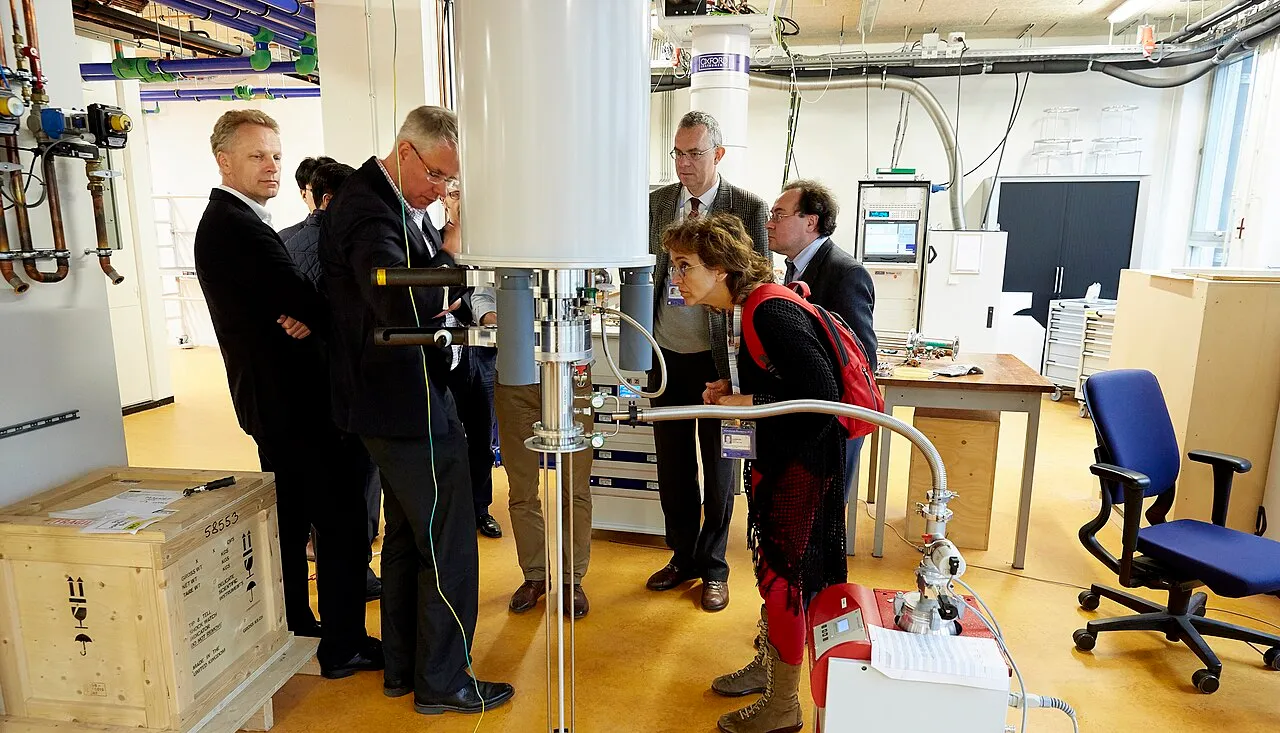
Qubits are extremely fragile, according to QuTech, the quantum institute run by TU Delft and the Dutch research organisation TNO. QuTech says the slightest fluctuation in their surroundings disturbs their quantum state, a process called decoherence. To shield qubits from heat and electrical noise, IBM says most qubit types are cooled inside a dilution refrigerator. That is to about a hundred times colder than one degree above absolute zero. That fragility is the reason today’s machines are counted in tens or low hundreds of working qubits, not millions.
Getting from errors to fault tolerance
Because qubits are so error-prone, a useful quantum computer needs quantum error correction, QuTech explains. That means encoding information across many physical qubits into fewer, more reliable logical qubits. Those logical qubits can detect and fix mistakes faster than they occur, a property called fault tolerance. QuTech names reaching fault tolerance, alongside making qubit hardware scalable, as a central goal of its own research. This earlier rundown of logical-qubit progress by company tracks how far hardware makers have got against that goal.
IBM has made its own progress here. According to IBM, it published a new error-correcting code, the bivariate bicycle or “gross” code, on the cover of Nature in March 2024. IBM says the code needs only around 288 physical qubits to protect 12 logical qubits for about a million error-check cycles. A comparable surface code would need nearly 3,000 physical qubits for the same job, a roughly tenfold reduction. The paper only stores information so far, not yet full calculations.
What a quantum computer can do today
Quantum computers have already produced results classical machines struggle to check. In June 2023, IBM reported in Nature that its 127-qubit Eagle processor produced accurate results for a physics simulation, a 2D transverse-field Ising model. That scale was beyond what brute-force classical methods could check exactly. Eagle ran the simulation roughly three times faster than the best approximate classical methods IBM tested. IBM called this a demonstration of quantum “utility” ahead of full fault tolerance.
Despite that milestone, IBM says today’s quantum computers are useful only for a narrow set of problems with many interacting variables. Examples include simulating molecules and materials, certain optimisation tasks and parts of machine learning. For most computing tasks, IBM expects classical computers to stay the better tool. It expects quantum processors to work alongside classical ones in hybrid workflows, rather than replace them.
A European qubit grid at QuTech
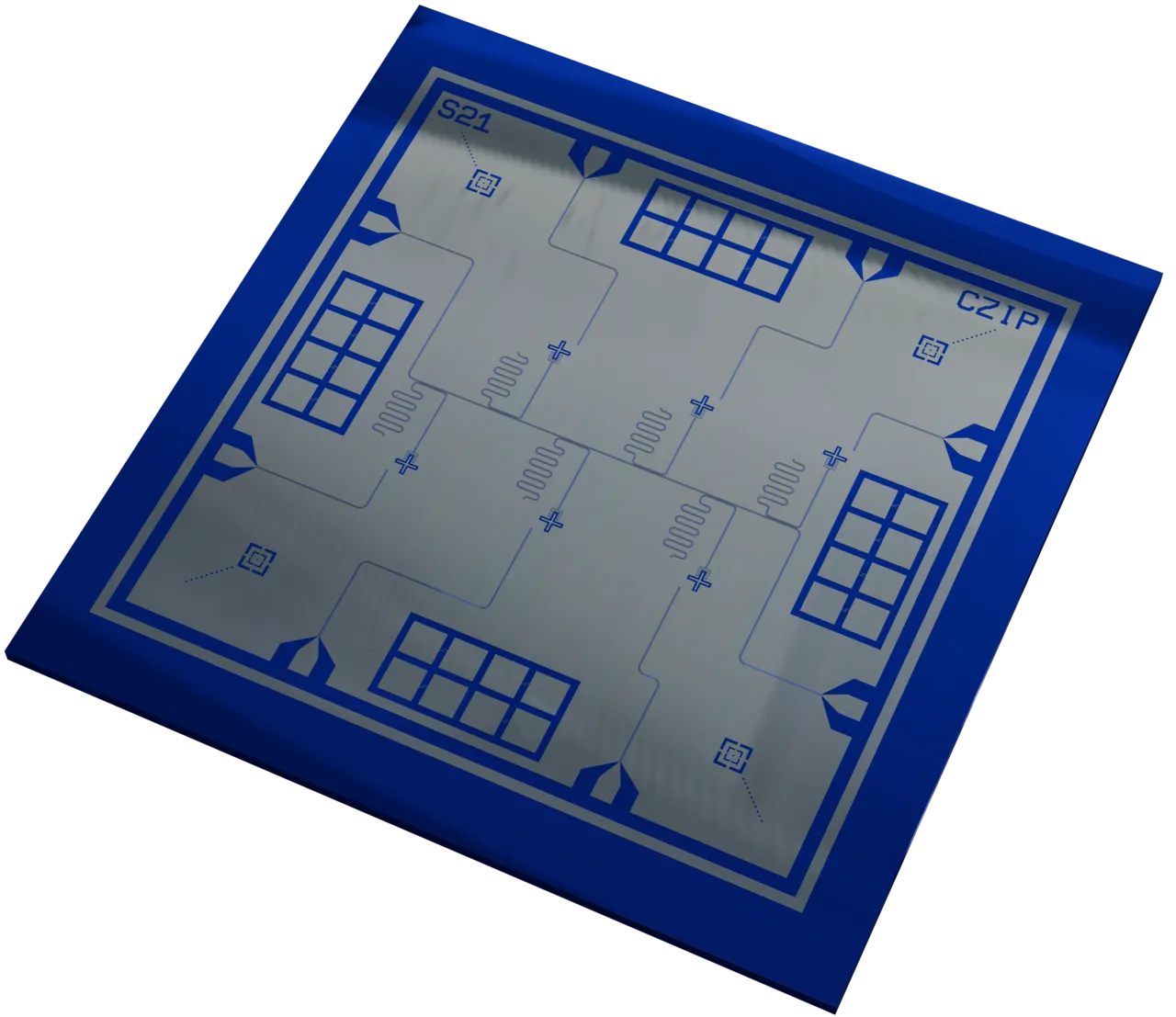
Hardware progress of this kind is not confined to the large processor makers. In the Netherlands, researchers at QuTech built a processor with four qubits made from quantum dots in germanium. The four work together in a two-by-two grid, with universal control over every qubit and a circuit entangling all four. QuTech describes this 2021 result as an important step toward scalable, two-dimensional qubit grids with many more qubits.
Sources
- [1]What is quantum computing? IBM Quantum en IBM Research
- [2]Division of Quantum Computing QuTech (TU Delft en TNO)
- [3]Landmark IBM error correction paper published on the cover of Nature IBM Quantum en IBM Research
- [4]A new paper from IBM and UC Berkeley shows a path toward useful quantum computing IBM Quantum en IBM Research
- [5]Semiconductor qubits scale in two dimensions QuTech (TU Delft en TNO)
MethodologyHow this article was made
- Facts confirmed
- 8 / 8
- Sources
- 5
- Last checked
- Nov 3, 2026
- Image
- Photo
This article was written by an AI system from facts in international trade media, publications by companies and research institutes and public sources, with the source for every fact, and checked under our methodology. The byline is an editorial pseudonym. Found an error? Report it through the contact page.
Facts used
- A quantum computer stores information in qubits instead of the classical bits of an ordinary computer. According to IBM, a qubit can hold a zero, a one, or, in a state called superposition, a weighted combination of both at once; a 100-qubit system in superposition can represent a far larger set of configurations than a classical computer of the same size. IBM · Nov 3, 2026
- Qubits can also be entangled, so that the state of one is correlated with another even when they are not physically connected, and measuring one qubit reveals information about its entangled partner, IBM says. A further effect, interference, lets the probability waves of a quantum calculation reinforce likely-correct configurations and cancel out wrong ones; superposition, entanglement and interference together give a quantum computer its computing power. IBM · Nov 3, 2026
- Qubits are extremely fragile, according to QuTech, the quantum institute run by TU Delft and the Dutch research organisation TNO, which says the slightest fluctuation in their surroundings disturbs their quantum state, a process called decoherence. To shield qubits from heat and electrical noise, IBM says most qubit types are cooled inside a dilution refrigerator to about a hundred times colder than one degree above absolute zero. QuTech · Nov 3, 2026
- Because qubits are so error-prone, a useful quantum computer needs quantum error correction, encoding information across many physical qubits into fewer, more reliable logical qubits that can detect and fix mistakes faster than they occur, a property called fault tolerance. QuTech names reaching fault tolerance, alongside making qubit hardware scalable, as a central goal of its own quantum-computing research. QuTech · Nov 3, 2026
- In March 2024, IBM published a new quantum error-correcting code, the bivariate bicycle or "gross" code, on the cover of Nature. IBM says the code needs only around 288 physical qubits to protect 12 logical qubits for about a million error-check cycles, versus nearly 3,000 physical qubits a comparable surface code would need, a roughly tenfold reduction; the paper only stores information so far, not yet full calculations. IBM · Nov 3, 2026
- In June 2023, IBM reported in Nature that its 127-qubit Eagle processor produced accurate results for a physics simulation, a 2D transverse-field Ising model, at a scale beyond what brute-force classical methods could check exactly, running roughly three times faster than the best approximate classical methods tested. IBM called this a demonstration of quantum "utility" ahead of full fault tolerance. IBM · Nov 3, 2026
- Despite that milestone, IBM says today's quantum computers are useful only for a narrow set of problems with many interacting variables, such as simulating molecules and materials, certain optimisation tasks and parts of machine learning. For most computing tasks, IBM expects classical computers to remain the better tool, with quantum processors working alongside them in hybrid workflows rather than replacing them. IBM · Nov 3, 2026
- In the Netherlands, researchers at QuTech, the quantum institute of TU Delft and TNO, built a processor in which four qubits made from quantum dots in germanium work together in a two-by-two grid, with universal control over every qubit and a circuit entangling all four. QuTech describes this 2021 result as an important step toward scalable, two-dimensional qubit grids with many more qubits. QuTech · Nov 3, 2026