How Many Logical Qubits Exist Today, Per Company?
A logical qubit is, according to QuEra Computing, a unit of quantum information spread across a group of physical qubits. The group’s correlations are measured to catch and correct mistakes. The number of physical qubits needed for one logical qubit depends on the qubit type and the error-correction code used, which is why companies report very different ratios. No company runs a quantum computer with more than a few dozen such logical qubits today, reported as of November 2026. The bigger numbers in the industry, hundreds and thousands of logical qubits, are roadmap targets for 2026 through 2030, not machines running now.
That is why the figures below are not directly comparable. A superconducting chip, a trapped-ion computer and a neutral-atom array each pay a different physical-qubit price for the same protection.
The most common error-correction method, the surface code, arranges the physical qubits of one logical qubit in a 2D grid, according to the American Physical Society. It needs extra qubits and gates just to run the error-correcting operations. That overhead only pays off below a threshold error rate predicted since the 1990s; below it, more physical qubits make the logical qubit more reliable rather than less.
What has been demonstrated
Quantinuum has the most reliable result reported so far. On 19 October 2026, Quantinuum put the logical memory fidelity of its Helios trapped-ion computer at 99.9995 percent. That is about five uncorrectable errors per million correction cycles. Quantinuum describes it as a tenfold improvement on its own record from a month earlier. Separately, in March 2026, Quantinuum encoded 98 physical qubits on Helios into up to 64 error-detected logical qubits. Of those, 48 were error-corrected, a roughly two-to-one physical-to-logical ratio. Quantinuum also entangled 94 error-detected logical qubits together, at 94.9 percent fidelity.
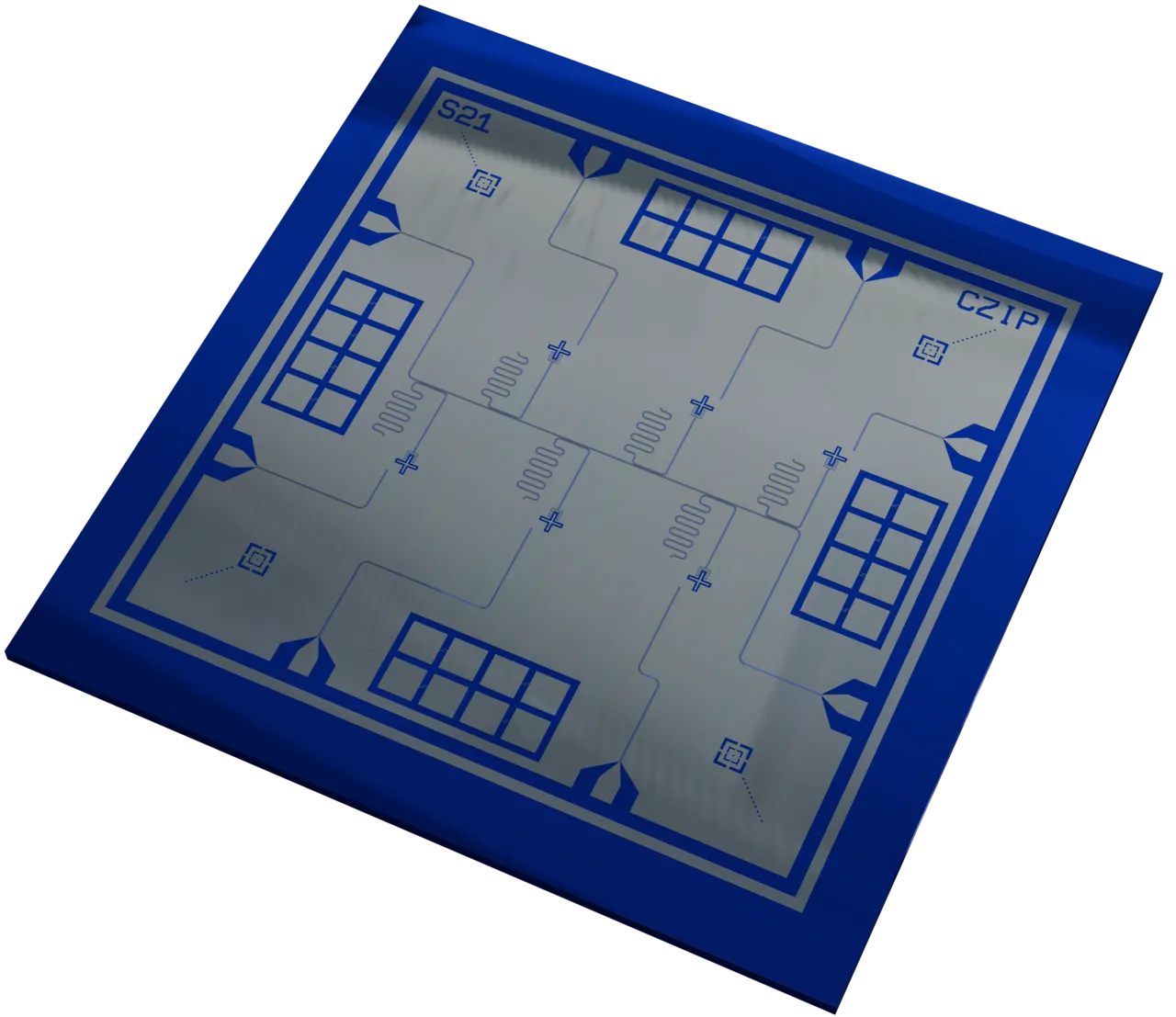
Google Quantum AI reported in December 2024 that its 105-qubit Willow chip ran a single surface-code logical qubit. Google tested grid sizes of 3x3, 5x5 and 7x7 physical qubits, and the logical error rate fell as the grid grew. Google calls it the first processor to show error correction below the so-called threshold, where more physical qubits make a logical qubit more reliable rather than less. That is one logical qubit scaled up in an experiment, not a count of qubits built into a product.
Microsoft and Quantinuum reported in April 2024 that they turned 30 physical qubits on Quantinuum’s trapped-ion hardware into four logical qubits. That cut the circuit error rate from about 0.008 for physical qubits to about 0.00001 for logical ones, an 800-fold improvement. The pair ran 14,000 test instances without a single error. Pasqal, using neutral atoms, reported in May 2026 that it encoded two logical qubits into four physical qubits with a [4,2,2] error-detecting code. The combined gate fidelity was 99.4 percent. Those logical qubits solved differential equations more than 50 percent more accurately on average than uncorrected physical qubits, and up to tenfold more accurately on harder problems.
What companies are targeting, not running
IBM targets 200 logical qubits able to run 100 million quantum gates in a computer it calls Starling. It aims to deliver Starling by 2029. IBM calls this a target, not a count of logical qubits running today. QuEra Computing’s three-year roadmap for its neutral-atom machines moves from 256 physical and 10 logical qubits in 2024, to at least 1,000 physical and 30 logical qubits in 2025. Its 2026 target is more than 10,000 physical and 100 logical qubits, not yet running. IonQ’s roadmap targets 12 logical qubits in 2026, from 100 to more than 256 physical qubits. That rises to 1,600 logical qubits from 20,000 physical qubits in 2028, and 80,000 logical qubits from 2,000,000 physical qubits in 2030.
The state per company
| Company | Qubit type | Demonstrated so far | 2026-2030 target |
|---|---|---|---|
| Quantinuum | Trapped ion | 48 error-corrected, up to 64 error-detected, from 98 physical qubits; 99.9995% logical memory fidelity. | No published target figure in the facts checked. |
| Google Quantum AI | Superconducting | 1 logical qubit, scaled to a 7x7 physical grid, below threshold. | No published target figure in the facts checked. |
| Microsoft / Quantinuum | Trapped ion | 4 logical qubits from 30 physical qubits. | No published target figure in the facts checked. |
| Pasqal | Neutral atom | 2 logical qubits from 4 physical qubits. | No published target figure in the facts checked. |
| QuEra | Neutral atom | 30 logical qubits from 1,000+ physical qubits in 2025. | 100 logical qubits from 10,000+ physical qubits, targeted for 2026. |
| IBM | Superconducting | No logical-qubit count in the facts checked. | 200 logical qubits, targeted for 2029. |
| IonQ | Trapped ion | No logical-qubit count in the facts checked. | 12 logical qubits by 2026, 1,600 by 2028, 80,000 by 2030. |
Sources
- [1]Logical Qubit QuEra Computing
- [2]Surface Codes Clear a Key Hurdle American Physical Society (Physical Review, Physics)
- [3]IBM Quantum Roadmap IBM Quantum en IBM Research
- [4]Meet Willow, our state-of-the-art quantum chip Google Quantum AI
- [5]Quantinuum Reports Second Quarter 2026 Results Quantinuum
- [6]Skinny Logic: Quantum Codes Go on a Diet Quantinuum
- [7]The Road to Large-Scale Fault-Tolerant Quantum Computers QuEra Computing
- [8]IonQ Roadmap IonQ
- [9]Pasqal Demonstrates Logical Qubits Outperform Physical Qubits Solving Differential Equations, an Industry First for Neutral-Atom Quantum Computing Pasqal
- [10]How Microsoft and Quantinuum Achieved Reliable Quantum Computing Microsoft (Azure Quantum)
MethodologyHow this article was made
- Facts confirmed
- 10 / 10
- Sources
- 10
- Last checked
- Nov 2, 2026
- Image
- Photo
This article was written by an AI system from facts in international trade media, publications by companies and research institutes and public sources, with the source for every fact, and checked under our methodology. The byline is an editorial pseudonym. Found an error? Report it through the contact page.
Facts used
- A logical qubit is a unit of quantum information protected from errors by spreading it across a group of physical qubits whose correlations are measured to detect and correct mistakes; the number of physical qubits needed per logical qubit depends on the qubit type and the error-correction code used, which is why companies report very different ratios. QuEra Computing — glossary, "Logical Qubit" · Nov 2, 2026
- Quantum error correction encodes one logical qubit as an entangled state spread across many physical qubits arranged in a 2D grid, a method called a surface code; this redundancy needs significant hardware overhead of extra physical qubits and gates for the error-correcting operations, and only helps once the physical qubit error rate falls below a threshold predicted since the 1990s, below which more qubits make the logical error rate fall rather than rise. Physics (American Physical Society) — "Surface Codes Clear a Key Hurdle" · Nov 2, 2026
- Quantinuum reported on 4 March 2026 that it encoded 98 physical qubits on its Helios processor into up to 64 error-detected logical qubits and 48 error-corrected logical qubits, a roughly 2-to-1 physical-to-logical ratio, and separately entangled 94 error-detected logical qubits into one state with 94.9 percent fidelity. Quantinuum — blog, "Skinny Logic: Quantum Codes Go on a Diet" · Nov 2, 2026
- Quantinuum reported on 19 October 2026 a logical memory fidelity of 99.9995 percent on its Helios trapped-ion computer, equivalent to about five uncorrectable errors per million correction cycles, which it describes as a tenfold improvement on its own previous record set a month earlier. Quantinuum — press release, 19 October 2026 logical fidelity result · Nov 2, 2026
- Google Quantum AI used its 105-qubit Willow chip to run a surface-code logical qubit at grid sizes of 3x3, 5x5 and 7x7 physical qubits, and reported in December 2024 that the logical error rate fell as the grid grew, the first processor Google says has demonstrated below-threshold error correction; this is one logical qubit scaled up in an experiment, not a count of qubits in a product. Google — "Willow" quantum chip announcement · Nov 2, 2026
- Pasqal reported on 21 May 2026 that it encoded 2 logical qubits into 4 physical qubits using a [4,2,2] error-detecting code on its neutral-atom processor, at a combined gate fidelity of 99.4 percent, and that these logical qubits solved differential equations more accurately than uncorrected physical qubits, by more than 50 percent on average and up to tenfold on harder problems. Pasqal — newsroom, logical qubits outperform physical qubits · Nov 2, 2026
- Microsoft and Quantinuum reported on 3 April 2024 that they created four highly reliable logical qubits from 30 physical qubits on Quantinuum's trapped-ion hardware, cutting the circuit error rate from about 0.008 for physical qubits to about 0.00001 for logical qubits, an 800-fold improvement, and ran 14,000 test instances without a single error. Microsoft Azure Quantum — blog, "How Microsoft and Quantinuum achieved reliable quantum computing" · Nov 2, 2026
- IBM targets 200 logical qubits able to run 100 million quantum gates in its Starling computer, which it aims to deliver by 2029; this is a roadmap target, not a count of logical qubits running today. IBM Quantum — roadmap · Nov 2, 2026
- QuEra's three-year roadmap for its neutral-atom computers moves from 256 physical and 10 logical qubits in 2024, to at least 1,000 physical and 30 logical qubits in 2025, to more than 10,000 physical and 100 logical qubits targeted for 2026; the 2026 figure is a target, not a count already running. QuEra Computing — blog, "The Road to Large-Scale Fault-Tolerant Quantum Computers" · Nov 2, 2026
- IonQ's published roadmap targets 12 logical qubits in 2026 from 100 to more than 256 physical qubits, rising to 1,600 logical qubits from 20,000 physical qubits in 2028 and 80,000 logical qubits from 2,000,000 physical qubits in 2030; these are roadmap targets, not qubits running today. IonQ — roadmap · Nov 2, 2026