What Does QuTech in Delft Do, and What Has It Achieved?
According to TU Delft, QuTech is a Delft research institute with a dual mission. It aims to develop scalable prototypes of both a quantum computer and an inherently safe quantum internet, built on the laws of quantum mechanics. Its work is organised into three divisions: Quantum Computing, Quantum Internet and Qubit Research. Those divisions span two faculties of Delft University of Technology (TU Delft), Applied Sciences and Electrical Engineering, Mathematics and Computer Science.
How QuTech started
According to QuTech, TU Delft and the Netherlands Organisation for Applied Scientific Research (TNO) founded the institute in 2015. That followed a decision announced in October 2013, after earlier research by the Delft group of professor Leo Kouwenhoven. On 1 June 2015, TU Delft, TNO, the Dutch Research Council (NWO) and the Dutch ministries of Economic Affairs and of Education, Culture and Science signed a covenant. That covenant supports QuTech through 2025. A year earlier, in 2014, the Dutch government had, according to QuTech, already given its quantum research the status of “National Icon”. It cited the pioneering character of the work, its economic potential for the Netherlands, and its possible contribution to major societal challenges.
QuTech says it now employs more than 300 people. It is based at Lorentzweg 1 in Delft, currently in the B and E wings of TU Delft’s Applied Sciences building. A dedicated new building is in development on the south side of the TU Delft campus. According to QuTech, it works within formal partnerships with TNO and NWO. It also runs collaboration programmes with the companies Intel and Fujitsu on quantum technology. Since January 2025, general director Kees Eijkel has led the institute, reporting to TU Delft’s executive board. Lieven Vandersypen is chief scientist.
A quantum network that keeps three nodes entangled at once
QuTech’s clearest result on the internet side, according to TU Delft, came on 15 April 2021. Its researchers reported in the journal Science that they had built the first multi-node quantum network based on entanglement. Three quantum processors, named Alice, Bob and Charlie, sat in the same building. The middle node, Bob, carried its own quantum memory and physical links to both of the other nodes. That let it maintain entanglement with Alice and Charlie at the same time. That is the basic building block a future quantum internet needs: a node that can hold onto one entangled link while a second one is set up. At the time, the team’s next step was to test the same approach outside the lab, on existing telecom fibre. It targeted a first metropolitan link for 2022.
A logical qubit built from seven physical qubits
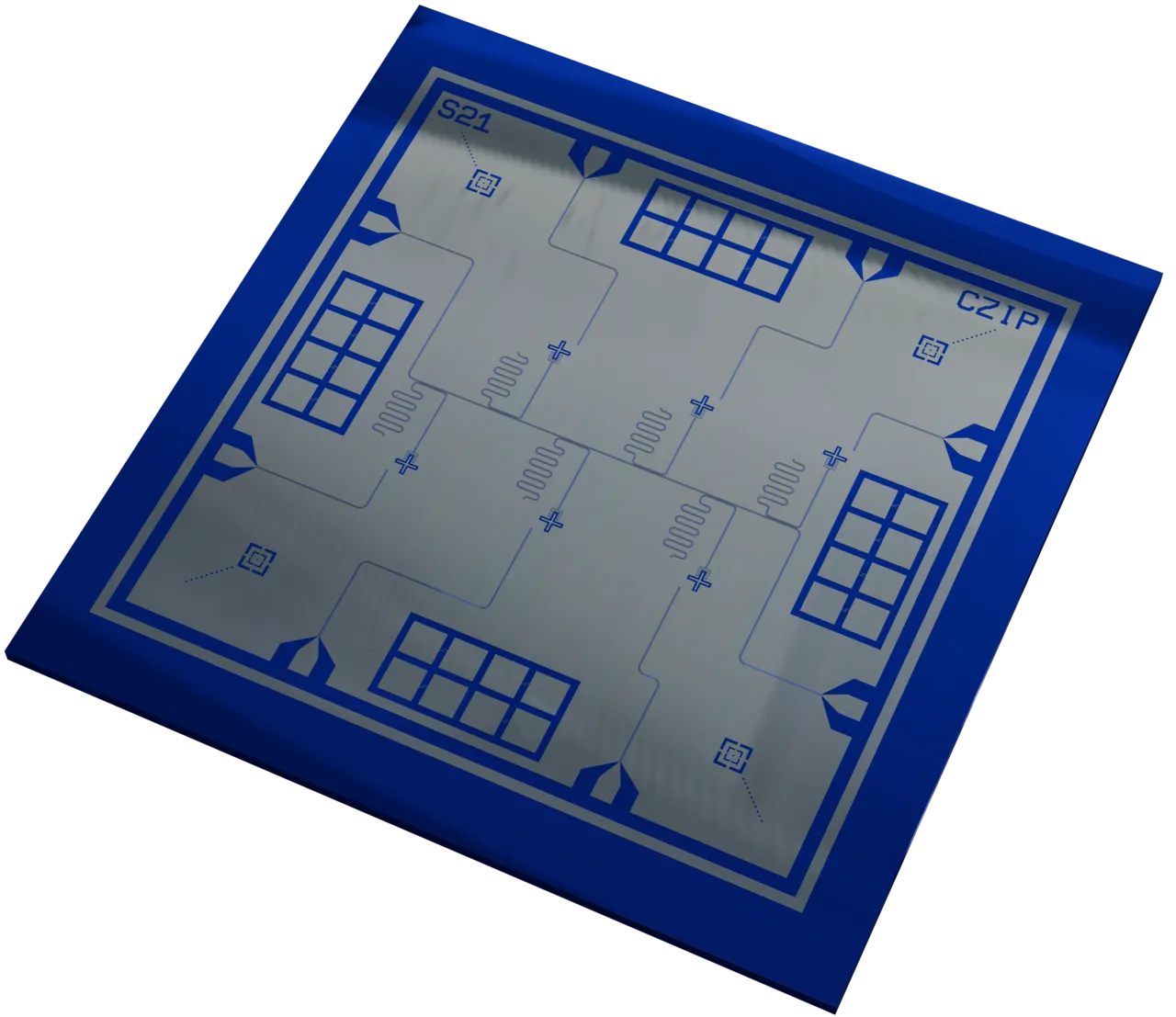
On the computing side, QuTech researchers announced in December 2021 that they had built a “logical qubit”. The result appeared in Nature Physics. The logical qubit was made of seven physical qubits, superconducting transmons. The team carried out all three basic operations on it, initialisation, a gate operation and readout, while errors were simultaneously detected and corrected. A logical qubit encodes one unit of quantum information redundantly across several physical qubits. That way, errors on individual qubits can be caught and fixed without destroying the information itself; it is the approach every large-scale quantum computer will need to control noise. After the seven-qubit result, the team aimed to scale the same approach up. Its next targets were 17 and later 49 physical qubits per logical qubit.
Where it stands
QuTech pursues both halves of its mission in parallel. One track is a quantum computer built from error-corrected logical qubits; the other is a quantum internet built from entangled network nodes, with qubit research as a shared foundation. Its 2021 results on a three-node entangled network and a seven-qubit logical qubit remain the institute’s two clearest public milestones. Its partnerships with Intel and Fujitsu, under general director Kees Eijkel since January 2025, carry that work forward.
Sources
- [1]History QuTech (TU Delft en TNO)
- [2]About us QuTech (TU Delft en TNO)
- [3]Our organisation QuTech (TU Delft en TNO)
- [4]QuTech takes important step in quantum computing with error correction QuTech (TU Delft en TNO)
- [5]QuTech TU Delft
- [6]Dutch researchers establish the first entanglement-based quantum network TU Delft
MethodologyHow this article was made
- Facts confirmed
- 7 / 7
- Sources
- 6
- Last checked
- Nov 15, 2026
- Image
- Photo
This article was written by an AI system from facts in international trade media, publications by companies and research institutes and public sources, with the source for every fact, and checked under our methodology. The byline is an editorial pseudonym. Found an error? Report it through the contact page.
Facts used
- QuTech says its mission is to develop scalable prototypes of a quantum computer and an inherently safe quantum internet, based on the laws of quantum mechanics. Its research is organised into three divisions - Quantum Computing, Quantum Internet and Qubit Research - spanning two faculties of TU Delft, Applied Sciences and Electrical Engineering, Mathematics and Computer Science. TU Delft, about QuTech · Nov 15, 2026
- QuTech says it is a research institute in Delft that aims to build a quantum computer and a quantum internet. It was founded in 2015 by Delft University of Technology (TU Delft) and the Netherlands Organisation for Applied Scientific Research (TNO), following a decision announced in October 2013 after earlier research by the Delft group of professor Leo Kouwenhoven. On 1 June 2015, TU Delft, TNO, NWO and the Dutch ministries of Economic Affairs and of Education, Culture and Science signed a covenant supporting QuTech through 2025. QuTech, history page · Nov 15, 2026
- The Dutch government gave QuTech's quantum research the status of 'National Icon' in 2014, citing the pioneering and innovative character of the work, its economic potential for the Netherlands, and its possible contribution to major societal challenges. QuTech, history page · Nov 15, 2026
- QuTech says it employs more than 300 people and is based at Lorentzweg 1 in Delft, currently in the B and E wings of TU Delft's Applied Sciences building; a new, dedicated building on the south side of the TU Delft campus is in development. QuTech, about us · Nov 15, 2026
- QuTech researchers built the first multi-node quantum network based on entanglement: three quantum processors, named Alice, Bob and Charlie, in the same building. The middle node, Bob, has its own quantum memory and physical links to both other nodes, letting it maintain entanglement with Alice and Charlie at the same time. The results appeared on 15 April 2021 in the journal Science (volume 372, issue 6539); the next step was testing the approach outside the lab, on existing telecom fibre, with a first metropolitan link targeted for 2022. TU Delft, on the three-node quantum network · Nov 15, 2026
- QuTech researchers built a 'logical qubit' made of seven physical qubits (superconducting transmons) and showed they could perform all three basic operations on it - initialization, a gate operation and readout - while errors were simultaneously detected and corrected. The work appeared in Nature Physics in December 2021; the team then aimed to scale up to 17 and later 49 physical qubits per logical qubit. QuTech, press release on the logical qubit with seven physical qubits · Nov 15, 2026
- QuTech works within formal partnerships with TNO and NWO, and has collaboration programmes with the companies Intel and Fujitsu on quantum technology. Since January 2025, the institute has been led by general director Kees Eijkel, who reports to TU Delft's executive board; Lieven Vandersypen is chief scientist. QuTech, our organisation · Nov 15, 2026