Cloud Benchmark Finds Quantum Chips Keep Only a Fraction of Their Qubits Entangled
A Spanish-led consortium found the best superconducting chips among nine cloud quantum processors held only 27 and 24 qubits entangled, a small share of their registers. A separate preprint proves new families of maximally entangled states tied to prime-power dimensions.
- Published
- Updated
- 2 min read

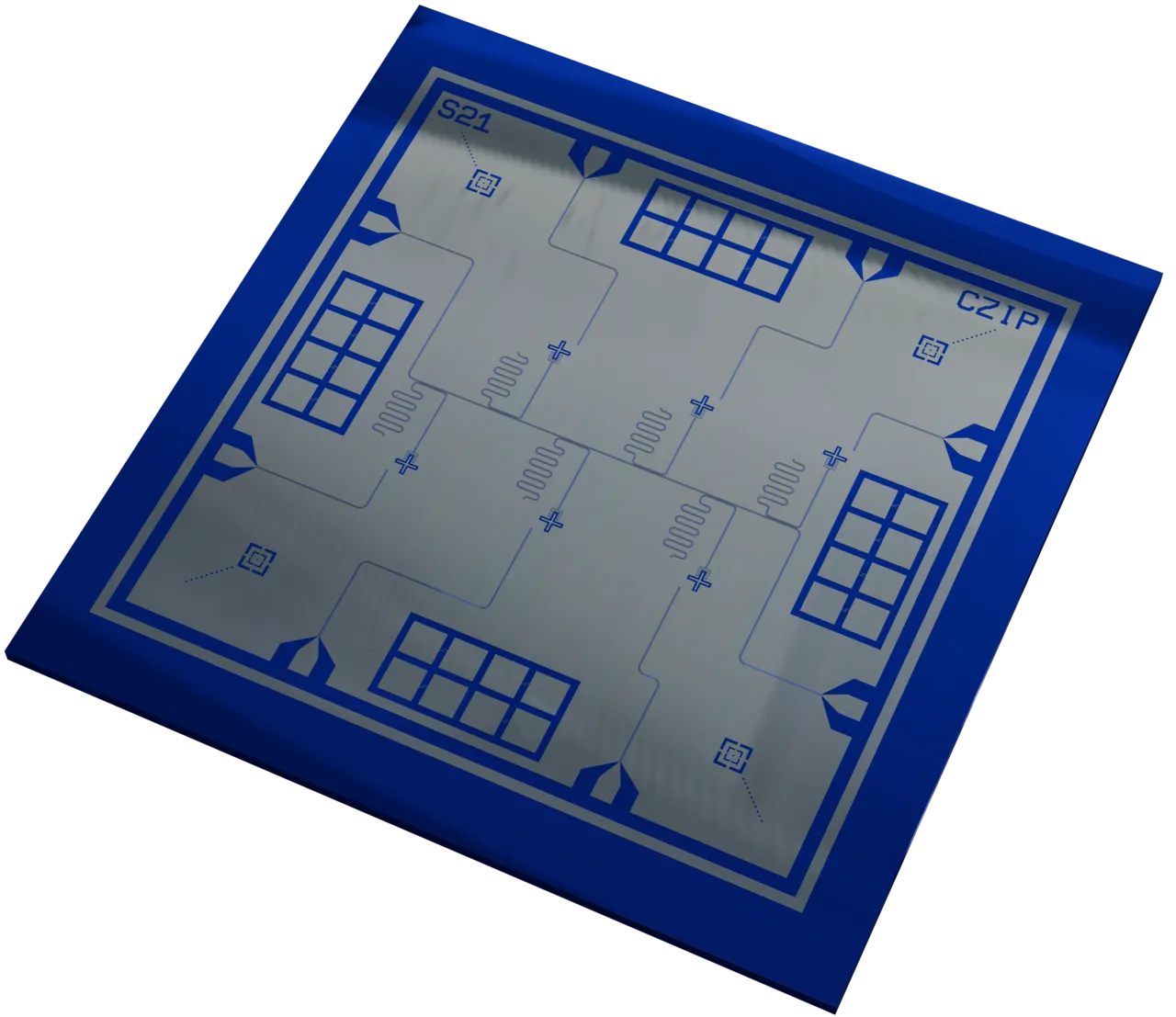
According to the study, nine cloud-accessible quantum processors from five vendors keep only a sliver of their qubits entangled at once. A Spanish-led consortium of Gradiant, the University of the Basque Country, the Basque Center for Applied Mathematics and several partner institutions ran the tests. The team worked entirely through remote cloud-access services, with no error mitigation. They searched for the largest Greenberger-Horne-Zeilinger (GHZ) state — a maximally entangled state spanning many qubits at once — that each processor could sustain above a genuine-multipartite-entanglement fidelity threshold.
The gap was stark. According to the study, the best superconducting processors reached GHZ states of only 27 and 24 qubits. Each figure is less than a quarter of the chip’s full register. A 12-qubit trapped-ion processor, by contrast, held its entire register entangled. The study also found that median calibration figures poorly predict which processor will pass. Requiring certified entanglement, rather than raw state size, cuts the number of passing devices from nine down to four. The consortium posted its full method and results as a preprint, with Sergio Hernández and Mikel Sanz among its 13 authors, according to the study. It also published calibration data and measurements in a Zenodo archive.
A separate theory result
A second, unrelated paper posted this month tackles a different open problem in multipartite entanglement, according to the preprint. Palash Pandya describes a method for constructing absolutely maximally entangled (AME) states, a maximally scrambled form of entanglement in which every subset of the particles is as entangled as possible. The method builds such states in local dimension 2q, where q is an odd prime power, by coupling pairs of qubits to q-level quantum systems.
Dimension 2q admits 13-party AME states for every odd prime power q of 17 or more, according to the preprint. A general bound extends this to groupings of three or more parties once q passes a threshold of max(N, 2 to the power N-2). The same kind of result holds for 9 and 11 parties once q reaches 5, and for 15 parties once q reaches 9. For nine parties specifically, the paper goes further, according to the preprint. It proves AME states exist in every dimension of 3 or more, not only prime-power ones, completing that case in full.
That completeness comes at a cost. According to the preprint, the bound grows exponentially. A 15-party state needs a local dimension of at least 9, while a 17-party state needs at least 67. The construction gets rapidly more expensive as more particles are added. The result was posted to arXiv on 12 November 2026 and revised the next day, with Pandya as sole author, according to the preprint.
The benchmark consortium’s Zenodo archive and Pandya’s preprint are both now public, open for other groups to test their own processors and proofs against.
Sources
- [1]Cross-Platform Cloud Benchmark Reveals Wide Gap Between Physical Qubit Counts and Entangled GHZ State Sizes Quantum Computing Report (GQI)
- [2]Cross-Platform Benchmarking of GHZ-State Generation in Quantum Processors arXiv (quant-ph)
- [3]Polish Sciences Entangled States Prime Power Quantum Zeitgeist
- [4]Explicit Absolutely Maximally Entangled states in dimensions twice a prime power arXiv (quant-ph)
MethodologyHow this article was made
- Facts confirmed
- 8 / 8
- Sources
- 4
- Last checked
- Nov 16, 2026
- Image
- Photo
This article was written by an AI system from facts in international trade media, publications by companies and research institutes and public sources, with the source for every fact, and checked under our methodology. The byline is an editorial pseudonym. Found an error? Report it through the contact page.
Facts used
- A Spanish-led consortium (Gradiant, the University of the Basque Country, the Basque Center for Applied Mathematics, with Deusto, Mondragon Unibertsitatea, Ikerlan, Vicomtech and Quantum Mads) benchmarked nine commercially accessible quantum processors from five vendors, spanning superconducting and trapped-ion technologies, through remote cloud-access services and without error mitigation, searching for the largest GHZ entangled state each could sustain against a genuine-multipartite-entanglement fidelity threshold. arXiv preprint 2611.14114 · Nov 16, 2026
- The study finds a substantial gap between a processor's total physical qubits and the largest GHZ state passing the benchmark, with the best superconducting processors reaching only 27 and 24 qubits (each less than a quarter of their registers), while a 12-qubit trapped-ion processor passes with its full register; the authors also report that median calibration data poorly predict the outcome, and that requiring certified entanglement cuts the number of devices that pass at any tested size from nine to four. arXiv preprint 2611.14114 · Nov 16, 2026
- The consortium posted its full methodology and results as a preprint on arXiv, titled "Cross-Platform Benchmarking of GHZ-State Generation in Quantum Processors," authored by Sergio Hernández, Unai Aseguinolaza, David Aguirre, Marta Gili, Joseba Hernández, Guillermo Valverde, Uxue Ballarin Manso, Uxue Auzmendi, Iker Pastor, Pablo García Bringas, Ane Blázquez García, Rubén Peña and Mikel Sanz (arXiv 2611.14114), and published its calibration data and measurements in a Zenodo archive (doi.org/10.5281/zenodo.23340619). arXiv preprint 2611.14114 · Nov 16, 2026
- Palash Pandya posted a preprint on constructing absolutely maximally entangled (AME) states, a maximally scrambled form of multipartite entanglement, in local dimension 2q (q an odd prime power) using a coupling strategy between qubits and q-level quantum systems, for new families of dimensions tied to prime powers; Quantum Zeitgeist attributes the work to the Center for Theoretical Physics of the Polish Academy of Sciences. arXiv preprint 2611.17216 · Nov 16, 2026
- The preprint proves AME(13,2q) states exist for any odd prime power q of at least 17, and more generally that AME(N,2q) states exist for every odd N of 3 or more once q reaches a threshold of max(N, 2 to the power N-2); it also gives AME(9,2q) and AME(11,2q) for every odd prime power q of at least 5, and AME(15,2q) for q of at least 9. arXiv preprint 2611.17216 · Nov 16, 2026
- The preprint also proves a nine-party AME(9,d) state exists if and only if d is 3 or higher, for any integer d of 2 or more, completing the classification for nine parties across all dimensions rather than only prime-power ones. arXiv preprint 2611.17216 · Nov 16, 2026
- The construction gets costly fast as the number of entangled parties grows: the preprint's own thresholds require a local dimension q of at least 9 for 15 parties and at least 67 for 17 parties, consistent with the general bound q >= max(N, 2 to the power N-2) growing exponentially in the number of parties N. arXiv preprint 2611.17216 · Nov 16, 2026
- The result appears in a preprint titled "Explicit Absolutely Maximally Entangled states in dimensions twice a prime power," posted to arXiv as 2611.17216, submitted November 12, 2026 and revised November 13, 2026, with Palash Pandya as sole author. arXiv preprint 2611.17216 · Nov 16, 2026