Why Do Quantum Computers Need To Be Cooled To Near Absolute Zero, And Which Ones Don't?
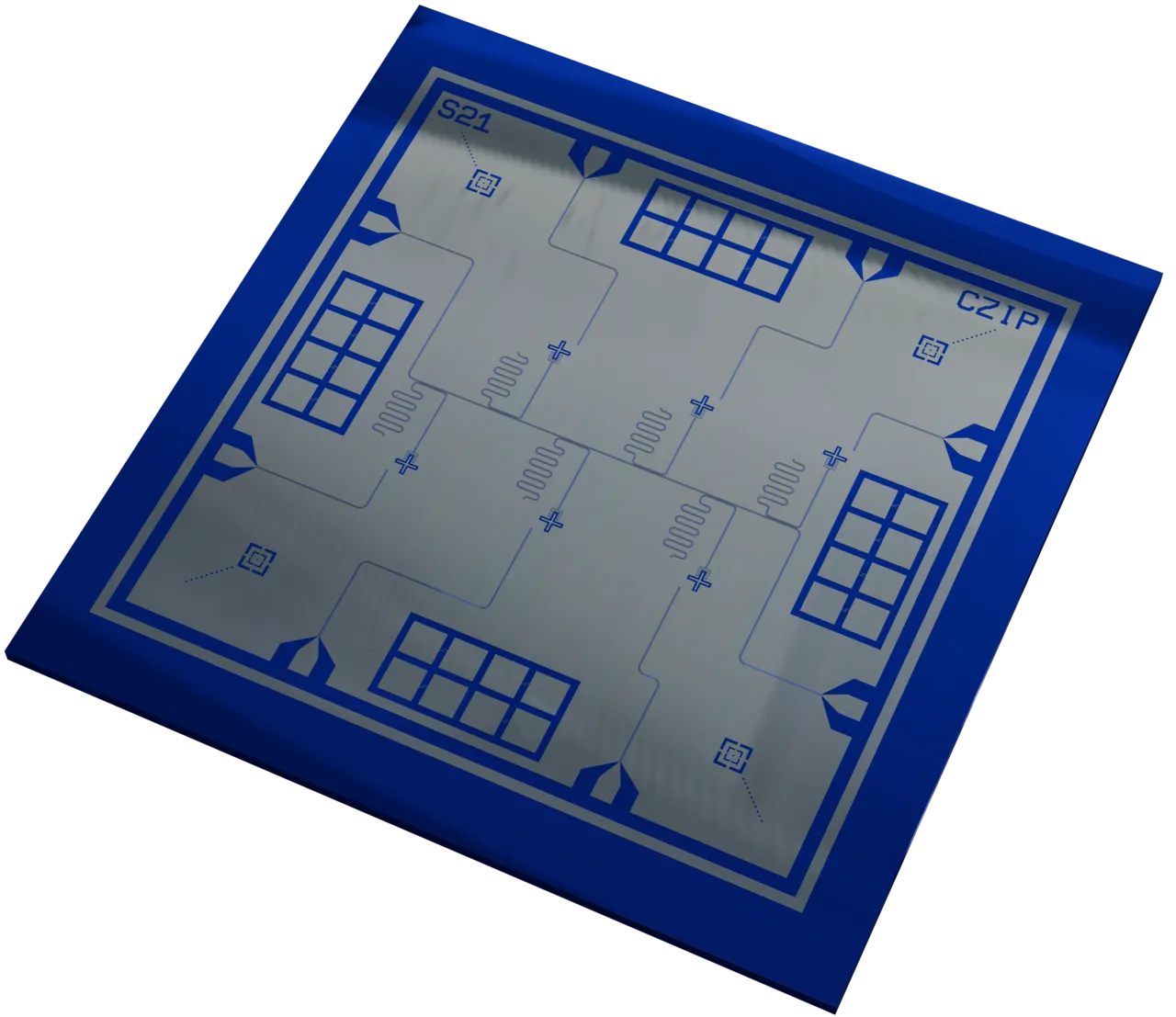
Superconducting qubits only work once chilled to about a hundred times colder than one degree above absolute zero, achieved with supercooled superfluids, according to IBM. IBM, Google and Rigetti build their chips on this qubit type. Not every quantum computer needs that cold. Trapped-ion machines from IonQ and neutral-atom machines from QuEra keep their surrounding hardware at room temperature instead.
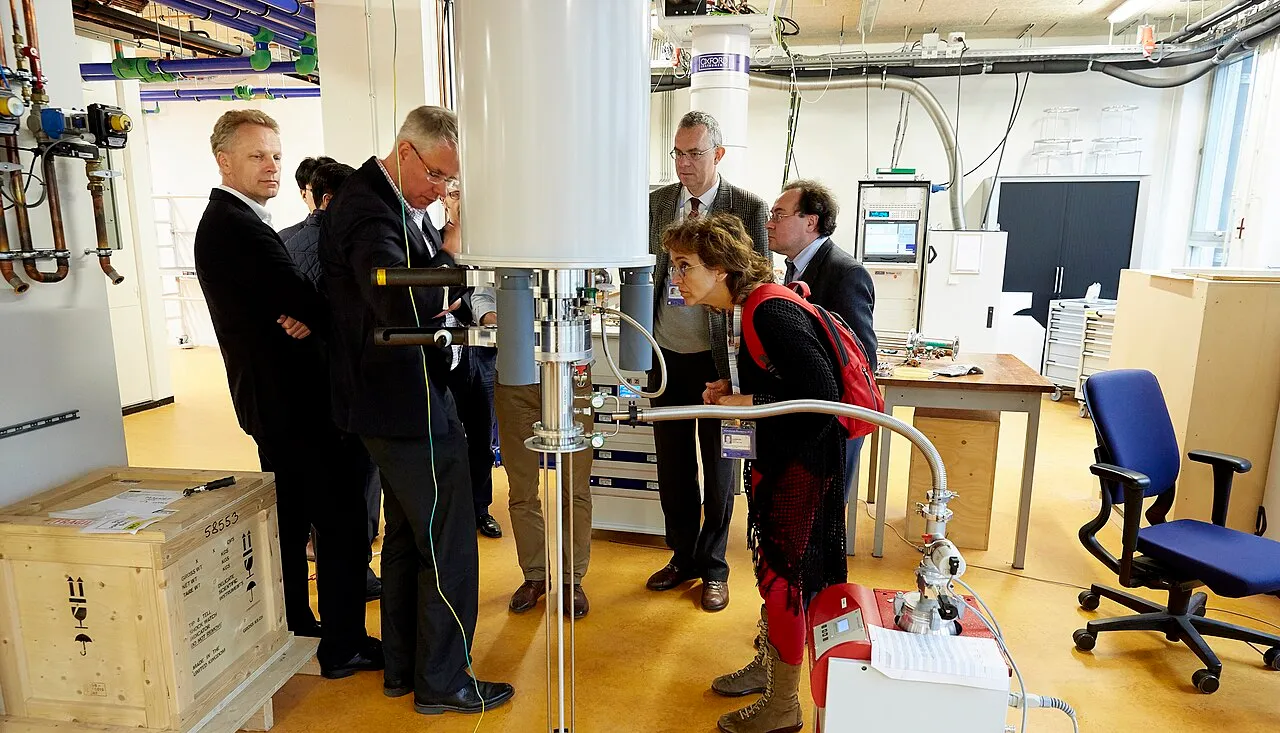
According to IBM, the reason is decoherence: a qubit’s fragile quantum state collapsing into an ordinary, classical one. Any stray heat or electrical interference can trigger it. So IBM says large machines need cooling colder than outer space. IBM reaches that temperature with a dilution refrigerator, a device that mixes the helium isotopes helium-3 and helium-4. Vacuum pumps circulate and dilute helium-3 into the mixture until the target temperature is reached. Below about 870 millikelvin that mixture separates into two phases, and helium-3 atoms crossing into the dilute phase absorb heat from their surroundings, which produces the cooling effect, according to Wikipedia. IBM’s Goldeneye concept system, built to test this cooling approach at a larger scale, reached about 25 millikelvin with a quantum processor wired inside it. Below the operating threshold, the qubits both superconduct, carrying current with no resistance, and show quantum behaviour at all, according to IBM.
Trapped-ion hardware cools only the qubits, not the machine around them. IonQ says it holds individual ions in a chip-based ion trap built from about 100 electrodes. Lasers then cool them, using a technique called Doppler cooling, to half of one one-thousandth of a degree above absolute zero. The rest of the hardware stays at room temperature, so no dilution refrigerator is needed. IonQ instead isolates the ion trap chip inside an ultra-high vacuum chamber, pumped down to around 10 to the power of minus 11 Torr. That is about a hundred trillion times fewer molecules per cubic inch than the air a person breathes, and it stops stray atoms from disturbing the ions’ quantum state.
QuEra’s neutral-atom systems take a similar route. According to QuEra, individual rubidium atoms sit in an ultra-high vacuum cell. Lasers cool them optically to microkelvin temperatures, colder than any refrigerator reaches, with no cryogenic plant around them. That design choice shows up in power use. QuEra says its room-temperature Aquila system draws under 12 kilowatt-hours. Its coming Libra system is designed to use less than 40 kilowatts. Either figure is low enough for the machine to sit inside an existing data centre or HPC facility, without specialised cryogenic infrastructure.
So the cooling a quantum computer needs depends on where its qubits come from. Superconducting qubits are circuits etched into a chip, so the whole chip must be cold enough to superconduct and hold a quantum state. Trapped-ion and neutral-atom qubits are individual atoms or ions, cooled one by one with lasers inside a vacuum. That leaves the surrounding electronics free to run at room temperature. As quantum computers move into data centres, that difference comes down to a dilution refrigerator on one side and a vacuum chamber with a laser system on the other.
Sources
MethodologyHow this article was made
- Facts confirmed
- 8 / 8
- Sources
- 5
- Last checked
- Nov 13, 2026
- Image
- Photo
This article was written by an AI system from facts in international trade media, publications by companies and research institutes and public sources, with the source for every fact, and checked under our methodology. The byline is an editorial pseudonym. Found an error? Report it through the contact page.
Facts used
- Superconducting qubits, the type IBM, Google and Rigetti use, only show quantum behaviour and superconduct without electrical resistance once cooled to approximately a hundred times colder than one degree above absolute zero, achieved with supercooled superfluids, according to IBM. IBM · Nov 13, 2026
- IBM says qubits need to be this cold to minimise noise and avoid decoherence, the process in which a qubit's fragile quantum state collapses into an ordinary, classical one; any stray heat or electrical interference can trigger it. Large-scale machines therefore need cooling systems capable of reaching temperatures lower than those found in outer space, IBM says. IBM · Nov 13, 2026
- IBM's own dilution refrigerators cool a mixture of the helium isotopes helium-3 and helium-4 into the milli-Kelvin range, using vacuum pumps to circulate and dilute helium-3 into the mixture until the target temperature is reached. IBM's Goldeneye concept system, built to test this cooling approach at a larger scale, reached about 25 millikelvin with a quantum processor wired inside, according to IBM. IBM · Nov 13, 2026
- A dilution refrigerator is a cryogenic device that provides continuous cooling to temperatures as low as about 2 millikelvin with no moving parts in its coldest stage. Below about 870 millikelvin, a mixture of helium-3 and helium-4 spontaneously separates into two phases, and helium-3 atoms crossing from the concentrated phase into the dilute phase absorb heat from their surroundings, which is the source of the cooling, according to Wikipedia. Wikipedia · Nov 13, 2026
- IonQ says its trapped-ion quantum computers do not need a dilution refrigerator at all. Individual ions are held in place by a chip-based ion trap with about 100 electrodes and cooled with lasers, using Doppler cooling, to half of one one-thousandth of a degree above absolute zero, while the surrounding hardware stays at room temperature, according to IonQ. IonQ · Nov 13, 2026
- IonQ says the ion trap chip sits inside an ultra-high vacuum chamber pumped down to around 10 to the power of minus 11 Torr, about a hundred trillion times fewer molecules per cubic inch than the air a person breathes, to stop stray atoms from disturbing the trapped ions' quantum state. IonQ · Nov 13, 2026
- QuEra says its neutral-atom quantum computers run at room temperature with no cryogenic infrastructure at all, unlike superconducting machines. Individual rubidium atoms are suspended in an ultra-high vacuum cell and cooled optically by lasers to microkelvin temperatures, colder than any refrigerator reaches, without any cryogenic plant around them, according to QuEra. QuEra Computing · Nov 13, 2026
- QuEra says its room-temperature Aquila neutral-atom system draws under 12 kilowatt-hours of power, and its coming Libra system is designed to consume less than 40 kilowatts, low enough for either to be installed directly inside existing data centres and HPC facilities without specialised cryogenic infrastructure, according to QuEra. QuEra Computing · Nov 13, 2026