What Is Microsoft's Majorana Qubit, and What Has It Shown?
A Majorana qubit is Microsoft’s attempt to store quantum information in a quasiparticle pair instead of a single particle’s fragile state. It is the design behind the two chips Microsoft has unveiled so far, Majorana 1 and Majorana 2, the latest in June 2026.
How the idea works
The underlying design is a topological qubit. The approach was theorised in 1997 by physicists Alexei Kitaev and Michael Freedman. It encodes information in the overall shape, or “braiding”, of exotic quasiparticles called anyons, where no single particle’s state carries it. Because the stored information depends on topology, not on fine local detail, small local disturbances should not corrupt it as easily as they do other qubit designs.
Microsoft’s version relies on Majorana zero modes. These are quasiparticles predicted to form at the ends of certain superconducting nanowires, each its own antiparticle. A pair of them is expected to store one bit of quantum information jointly, split between both ends and not held in either one alone. That shared storage is the whole appeal: disturb one end, and the stored bit should still be recoverable from the pair.
The qubit is named after Ettore Majorana. He was an Italian theoretical physicist who in 1937 worked out a theory in which neutral particles such as neutrinos could be their own antiparticle, a class now called Majorana fermions. Majorana disappeared on 25 March 1938, aged 31. A Rome court closed that case in January 2025 by declaring him presumed dead.
What Microsoft has unveiled
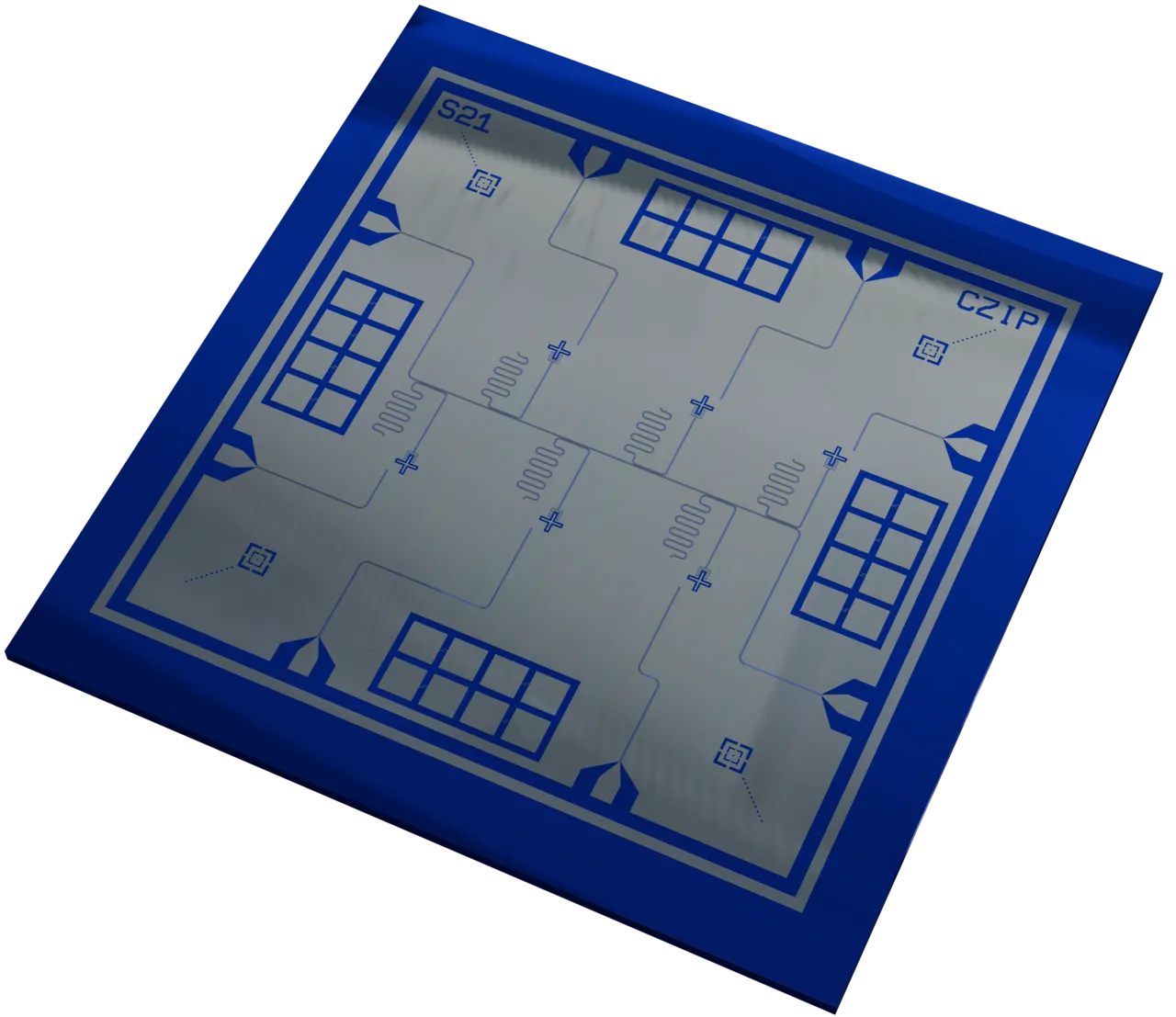
According to Microsoft, it unveiled its first chip, Majorana 1, on 19 February 2025, calling it the first quantum processing unit built on a “topological core”. The eight-qubit chip is made from a material Microsoft calls a topoconductor, a hybrid of indium arsenide and aluminium, which the company says can host Majorana zero modes. Microsoft says the same architecture can eventually scale to a million qubits on one chip.
Alongside that unveiling, Microsoft said it had been selected as one of two companies to advance to the final phase of DARPA’s Underexplored Systems for Utility-Scale Quantum Computing programme. Under that programme it aims to build a fault-tolerant prototype topological quantum computer “in years, not decades”.
Microsoft’s claim that Majorana 1 holds working topological qubits goes further than its own companion paper in Nature actually states, published the same day as the unveiling. That paper describes a new way to read out the parity of a hybrid semiconductor-superconductor device. But it says explicitly that these measurements “do not, by themselves, determine whether the low-energy states detected by interferometry are topological”. In other words, the published science supports a narrower claim than the press announcement.
A gap like that matters because Microsoft-affiliated researchers made a similar claim earlier and had to withdraw it. Researchers at TU Delft’s QuTech institute published a 2018 Nature paper claiming conclusive evidence for Majorana zero modes. A TU Delft Research Integrity Committee investigation found the researchers had selected data that supported the phenomenon they were looking for, while omitting data that could have raised questions about the conclusions. The authors retracted the paper on 8 March 2021.
Majorana 2 and the reliability claim
Microsoft unveiled its second-generation chip, Majorana 2, on 2 June 2026 and says it is 1,000 times more reliable than Majorana 1. It reports qubit lifetimes exceeding 20 seconds, occasionally over one minute, up from 1 to 12 milliseconds before. That gain follows swapping Majorana 1’s aluminium superconductor for lead. Microsoft also says it has cut its timeline in half, now targeting 2029 for a scalable, practical quantum computer. It calls that a milestone on the path to a fault-tolerant machine, not a fault-tolerant machine itself.
Those figures are Microsoft’s own characterisation of its hardware. The 2029 target is the next date to watch, on Microsoft’s own revised timeline.
Sources
- [1]Majorana zero mode Wikipedia EN/NL
- [2]Majorana 1 Wikipedia EN/NL
- [3]Topological quantum computer Wikipedia EN/NL
- [4]Ettore Majorana Wikipedia EN/NL
- [5]Microsoft unveils Majorana 1, the world's first quantum processor powered by topological qubits Microsoft (Azure Quantum)
- [6]Majorana 2: A novel, scalable quantum processor Microsoft (Azure Quantum)
MethodologyHow this article was made
- Facts confirmed
- 8 / 8
- Sources
- 6
- Last checked
- Nov 8, 2026
- Image
- Photo
This article was written by an AI system from facts in international trade media, publications by companies and research institutes and public sources, with the source for every fact, and checked under our methodology. The byline is an editorial pseudonym. Found an error? Report it through the contact page.
Facts used
- A Majorana zero mode is a quasiparticle, not a fundamental particle, that is its own antiparticle; Microsoft describes Majorana zero modes as forming at the ends of topological superconducting nanowires, with an unpaired electron shared between a pair of them so that the pair jointly stores one bit of quantum information (as parity) rather than storing it in either end alone, which is what Microsoft and other groups are trying to exploit to build a topological qubit. Wikipedia · Nov 8, 2026
- A topological qubit stores quantum information in the overall shape, or "braiding", of exotic quasiparticles called anyons rather than in a single particle's state, an approach first theorised in 1997 by physicists Alexei Kitaev and Michael Freedman; because the stored information depends on topology rather than on fine local detail, small local disturbances are not expected to corrupt it as easily as they do other qubit designs. Wikipedia · Nov 8, 2026
- The qubit is named after Ettore Majorana, an Italian theoretical physicist who in 1937 worked out a theory in which neutral particles such as neutrinos could be their own antiparticle, now called Majorana fermions; Majorana disappeared on 25 March 1938, aged 31, a disappearance the Court of Rome closed on 17 January 2025 by issuing a decree presuming him dead. Wikipedia · Nov 8, 2026
- Microsoft unveiled Majorana 1 on 19 February 2025, calling it the first quantum processing unit built on a "topological core", an eight-qubit chip made from a material Microsoft calls a topoconductor, a hybrid of indium arsenide and aluminium, which the company says can host Majorana zero modes and is designed so the same architecture can eventually scale to a million qubits on one chip. Microsoft Azure Quantum blog · Nov 8, 2026
- Alongside the Majorana 1 unveiling, Microsoft said it had been selected as one of two companies to advance to the final phase of DARPA's Underexplored Systems for Utility-Scale Quantum Computing (US2QC) programme, under which it aims to build a fault-tolerant prototype quantum computer based on topological qubits "in years, not decades". Microsoft Azure Quantum blog · Nov 8, 2026
- Microsoft's companion paper in Nature (published 19 February 2025) describes a new way to read out the parity of a hybrid semiconductor-superconductor device, but the paper itself states that these measurements "do not, by themselves, determine whether the low-energy states detected by interferometry are topological" — a narrower claim than Microsoft's public announcement that it had built working topological qubits. Wikipedia · Nov 8, 2026
- Microsoft-affiliated researchers at TU Delft's QuTech institute published a 2018 Nature paper claiming conclusive evidence for Majorana zero modes; a TU Delft Research Integrity Committee investigation found the researchers had selected data that supported the phenomenon they were looking for while omitting data that could have raised questions about the conclusions, and the authors retracted the paper on 8 March 2021. QuTech (TU Delft) · Nov 8, 2026
- Microsoft said its second-generation Majorana 2 chip, unveiled 2 June 2026, is 1,000 times more reliable than Majorana 1, with qubit lifetimes exceeding 20 seconds (occasionally over one minute) versus 1-12 milliseconds before, after swapping Majorana 1's aluminium superconductor for lead, and that it has cut in half its timeline for a scalable, practical quantum computer, now targeting 2029 as a milestone on the path to a fault-tolerant machine. Microsoft Quantum · Nov 8, 2026