What Are Optical Atomic Clocks, And How Precise Are They?
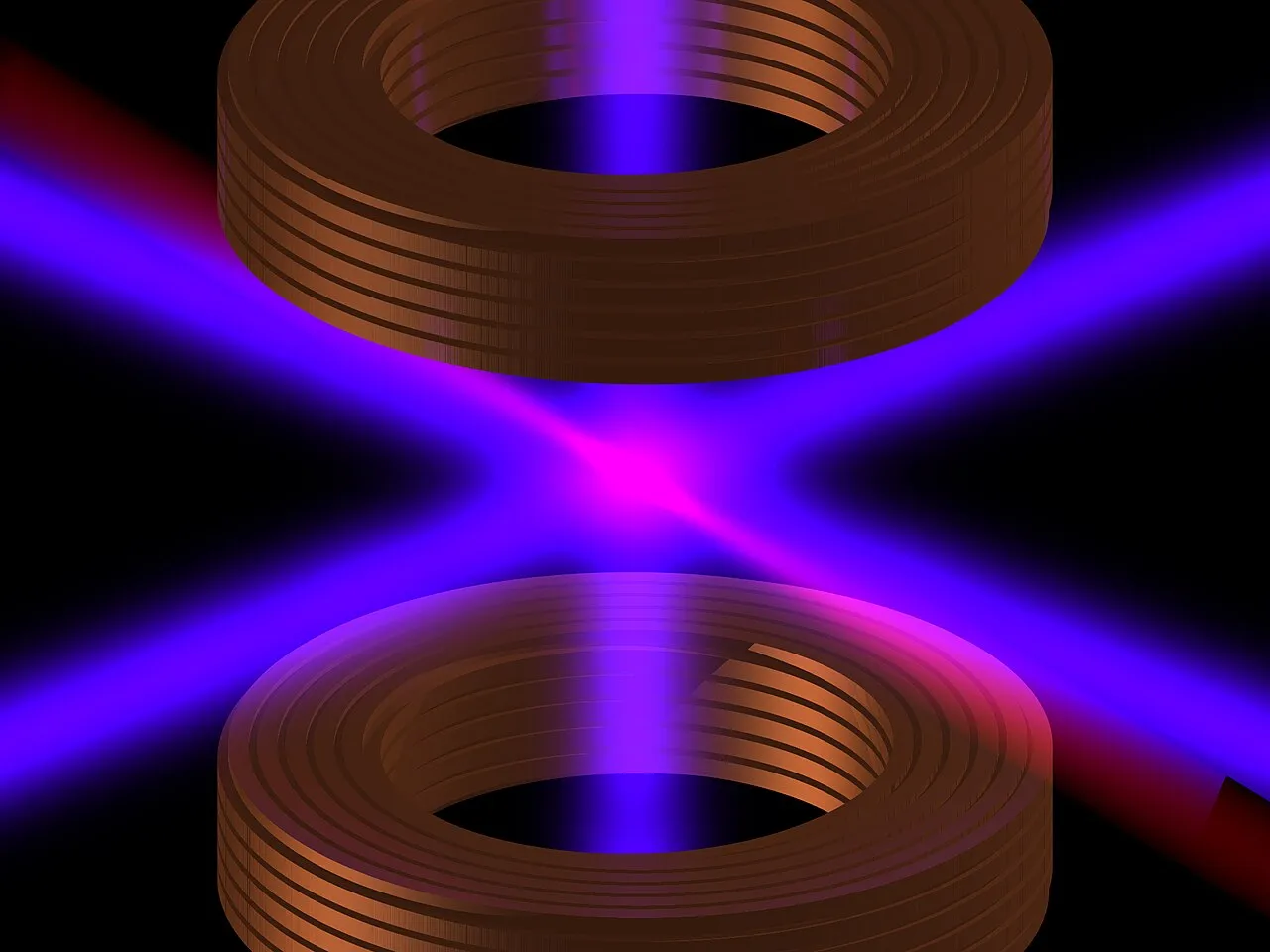
According to NIST, an optical atomic clock ticks on an atomic transition at optical, near-petahertz frequency, rather than the microwave, gigahertz transition that caesium clocks use. NIST’s ytterbium version has reached a stability of about 3.2 parts in 10^19 when averaged over a day, a record for any atomic clock when NIST reported it in Nature on 28 November 2018. That ytterbium clock holds roughly a thousand atoms, trapped in pancake-shaped wells of laser light. A stability that fine means the clock would neither gain nor lose a second over tens of billions of years.
Every atomic clock, optical or microwave, works the same basic way. It counts the fixed, natural oscillation of an atom, and uses that count to mark off seconds, instead of a pendulum or a quartz crystal. The difference between the two families is simply how fast that internal oscillation ticks. That difference turns out to matter a great deal for accuracy. According to NIST, caesium clocks need long averaging times to reach their best accuracy. Its NIST-F1 caesium fountain clock takes about five days, roughly 400,000 seconds. A ytterbium optical clock reaches comparable stability in about one second, NIST says. Settling on its best accuracy in a second rather than a working week lets researchers compare, tune and improve the clock far more quickly in the lab.
That gain is why the body that defines the second wants to switch references. BIPM plans to redefine the SI second on an optical atomic transition, in place of the current caesium-microwave definition. Ytterbium-171 and strontium-87 are the leading candidates; both already feed into International Atomic Time as secondary representations of the second. BIPM anticipates adoption in 2030 or later, once clock stability, uncertainty and comparison techniques meet its roadmap criteria. The second has been redefined before, from an astronomical measure to the caesium transition. A move to an optical one would be the next step in the same long search for a steadier reference.
Optical clocks are also shrinking, from laboratory instruments toward deployable hardware. NIST built a chip-scale optical atomic clock using integrated photonics and metasurface optics. It is roughly one-thousandth the size of NIST’s record-setting laboratory ytterbium clock at JILA, only a few inches on a side excluding its lasers. NIST lists potential uses including timing for power grids, data centres and financial markets, gravity-sensing quantum sensors, geodesy and navigation, and space-based physics experiments. Power grids and financial exchanges already depend on precise, synchronised timing to order transactions and keep electricity flowing smoothly. That is why a clock small enough to leave the laboratory matters as much as one that is merely more stable.
A commercial version is already further along the deployment path. Infleqtion’s Tiqker optical atomic clock fits in a roughly 30-litre, 30-kilogram 3U rack-mount unit, about a tenth the size of a hydrogen maser. The company says it delivers hydrogen-maser-like short-term stability, outperforming caesium-beam references, rubidium standards and chip-scale atomic clocks on short-to-mid timescales. In October 2025, Infleqtion says Tiqker was trialled aboard the Royal Navy’s Excalibur autonomous underwater vehicle, to advance GPS-free navigation. The trial let the platform hold accurate timing and position for longer when it has no satellite signal. Lose the satellite link, and an autonomous vehicle normally loses track of time and position together. A clock stable enough to hold both on its own matters to any platform that operates underwater, underground or out of satellite reach.
Sources
- [1]NIST "Ticktock" Atomic Clocks Keep Time With Record Accuracy NIST
- [2]Optical Atomic Clocks NIST
- [3]Redefinition of the second BIPM (International Bureau of Weights and Measures)
- [4]NIST Puts Record-Setting Optical Atomic Clock on a Chip NIST
- [5]Tiqker and Atomic Clocks: What PNT Buyers Need to Know Infleqtion
MethodologyHow this article was made
- Facts confirmed
- 6 / 6
- Sources
- 5
- Last checked
- Nov 12, 2026
- Image
- Photo
This article was written by an AI system from facts in international trade media, publications by companies and research institutes and public sources, with the source for every fact, and checked under our methodology. The byline is an editorial pseudonym. Found an error? Report it through the contact page.
Facts used
- NIST reported in Nature on 28 November 2018 that its ytterbium optical lattice clock, holding about a thousand ytterbium atoms trapped in pancake-shaped wells of laser light, reached a stability of about 3.2 parts in 10^19 when averaged over a day, then a record for any atomic clock. NIST · Nov 12, 2026
- NIST says optical atomic clocks run on an atomic transition at optical (near-petahertz) frequency rather than the microwave (gigahertz) transition caesium clocks use, so they need far less averaging time to reach top performance. Its NIST-F1 caesium fountain clock needs about five days (roughly 400,000 seconds) of averaging for its best accuracy, while ytterbium optical clocks reach comparable stability in about one second. NIST · Nov 12, 2026
- BIPM says it plans to redefine the SI second on an optical atomic transition in place of the current caesium-microwave definition, with ytterbium-171 and strontium-87 as the leading candidate transitions; both are already reported to BIPM as secondary representations contributing to International Atomic Time. BIPM anticipates adoption in 2030 or later, once clock stability, uncertainty and comparison techniques meet its roadmap criteria. BIPM · Nov 12, 2026
- NIST says it built a chip-scale optical atomic clock using integrated photonics and metasurface optics that is roughly one-thousandth the size of its record-setting laboratory ytterbium clock at JILA, only a few inches on a side excluding its lasers. NIST lists potential uses including timing for power grids, data centres and financial markets, gravity-sensing quantum sensors, geodesy and navigation, and space-based physics experiments. NIST · Nov 12, 2026
- Infleqtion says its Tiqker optical atomic clock fits in a roughly 30-litre, 30-kilogram 3U rack-mount unit, about a tenth the size of a hydrogen maser, and delivers hydrogen-maser-like short-term stability that it says outperforms caesium-beam references, rubidium standards and chip-scale atomic clocks on short-to-mid timescales. Infleqtion · Nov 12, 2026
- Infleqtion says its Tiqker optical atomic clock was trialled in October 2025 aboard the Royal Navy's Excalibur autonomous underwater vehicle to advance GPS-free navigation, letting the platform hold accurate timing and position for longer when it has no satellite signal. Infleqtion · Nov 12, 2026