Qunova Says Its Hybrid Algorithm Matched a Classical Benchmark on an Iron-Sulfur Cluster
South Korea's Qunova Computing says its HI-VQE algorithm reached chemical accuracy on a notoriously hard iron-sulfur molecule using 80 qubits, a result the company says beats its own 72-qubit run from September at a fraction of the computing cost.
- Published
- Updated
- 2 min read
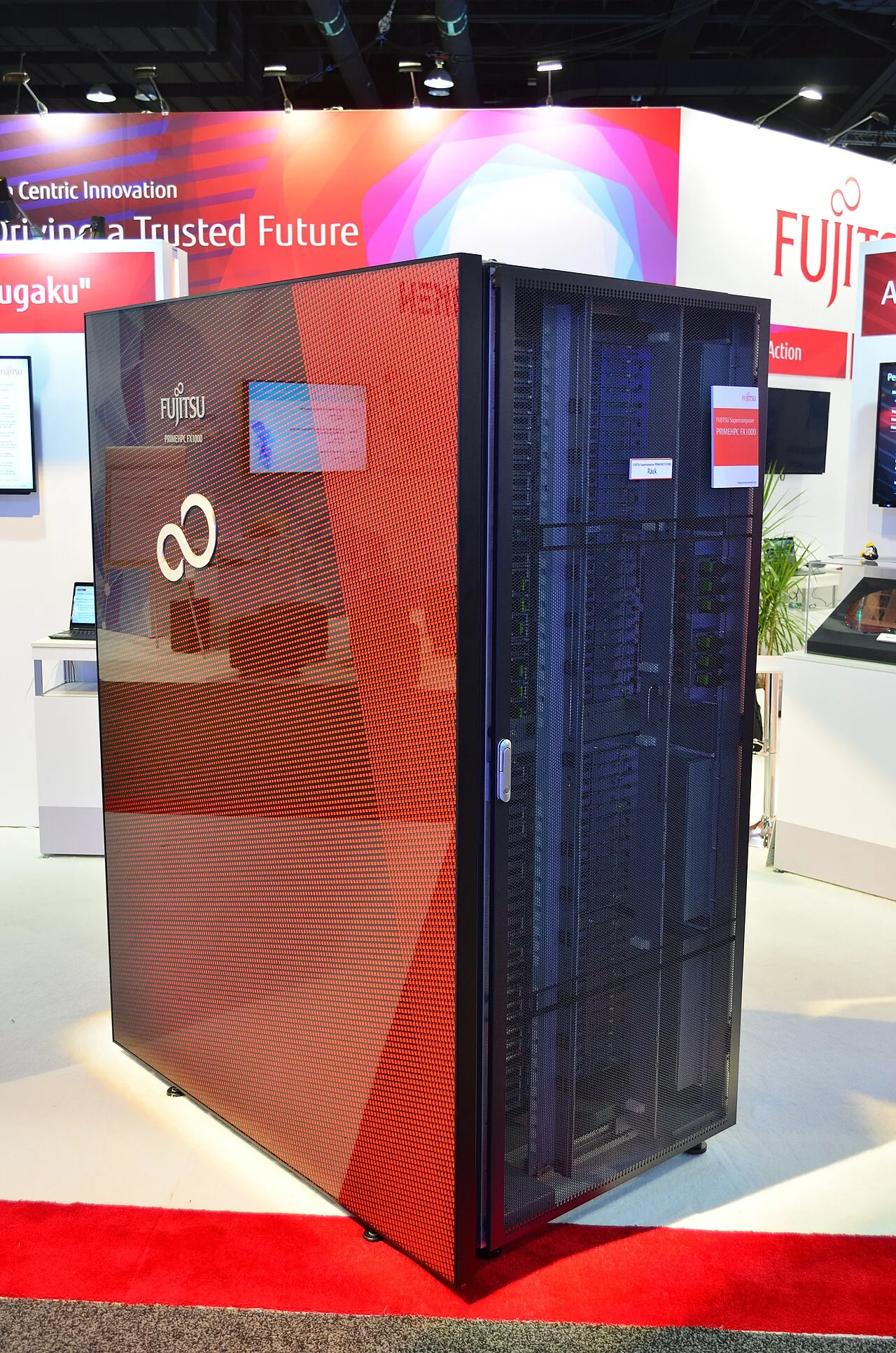
South Korea’s Qunova Computing says its HI-VQE algorithm has reached chemical accuracy on a 4Fe-4S iron-sulfur cluster. The run used 80 qubits on an IBM Quantum System Two processor, according to Qunova. The company calls the cluster one of the hardest known test cases in computational chemistry. HI-VQE pairs that IBM processor with RIKEN’s Fugaku supercomputer in a hybrid workflow, according to Qunova.
Qunova’s estimated ground-state energy for the cluster is about -327.2482 Hartree. That falls within the chemical-accuracy range of the classical DMRG reference value of about -327.2471 Hartree the company used as its benchmark. Qunova’s chief executive, Kevin Rhee, said the cluster has long been a test case only the strongest classical methods could handle, according to Qunova’s CEO. He framed the run as the first time a quantum algorithm has met that same standard.
In a preprint the company published with RIKEN researchers in September 2026, an earlier version of HI-VQE used 72 qubits for the same cluster. That run reached a ground-state energy of about -327.1757 Hartree against a DMRG reference of about -327.2396 Hartree, a gap of roughly 64 millihartree. It fell short of chemical accuracy, and needed about 66,249 node-hours on Fugaku to get even that close. Qunova says the November result needed only about 2,500 node-hours. That is a cut of roughly 300 times in computational cost versus its earlier quantum-diagonalisation approach, according to Qunova.
The project involved IBM’s quantum unit and Japan’s RIKEN research centre, according to Qunova. Qunova says it was funded through NEDO, Japan’s state energy and industrial technology agency, under a programme backed by the country’s trade ministry. Qunova joined that NEDO-backed JHPC-quantum programme earlier in 2026 to deploy high-precision chemistry solvers for Japanese users.
Sources
- [1]Qunova's Hybrid Computing Method Matches Classical Benchmark for Iron-Sulfur Cluster The Quantum Insider
- [2]Extending the Handover-Iterative VQE to Challenging Strongly Correlated Systems: N2 and Fe-S Cluster arXiv (quant-ph)
- [3]Qunova Computing Joins Japan's JHPC-quantum Test User Program to Deploy High-Precision Chemistry Solvers Quantum Computing Report (GQI)
MethodologyHow this article was made
- Facts confirmed
- 7 / 7
- Sources
- 3
- Last checked
- Nov 12, 2026
- Image
- Photo
This article was written by an AI system from facts in international trade media, publications by companies and research institutes and public sources, with the source for every fact, and checked under our methodology. The byline is an editorial pseudonym. Found an error? Report it through the contact page.
Facts used
- Qunova reports that HI-VQE reached chemical accuracy at 80 qubits while modelling the 4Fe-4S iron-sulfur cubane cluster, a molecule the company calls one of the hardest known test cases in computational chemistry, according to Qunova. Qunova Computing, carried by The Quantum Insider · Nov 12, 2026
- South Korean firm Qunova Computing says its HI-VQE algorithm, a hybrid workflow pairing an IBM Quantum System Two processor with RIKEN's Fugaku supercomputer, was used to simulate a complex iron-sulfur molecule, according to Qunova. Qunova Computing, carried by The Quantum Insider · Nov 12, 2026
- Qunova's estimated ground-state energy for the cluster, about -327.2482 Hartree, falls within the chemical-accuracy range of the classical DMRG reference value of about -327.2471 Hartree that the company used as its benchmark. Qunova Computing, carried by The Quantum Insider · Nov 12, 2026
- Qunova says the new run cut computational cost by roughly 300 times versus its earlier quantum-diagonalization approach, while still needing about 2,500 node-hours on the Fugaku supercomputer to refine the result. Qunova Computing, carried by The Quantum Insider · Nov 12, 2026
- In a preprint Qunova published with RIKEN researchers in September 2026, an earlier version of HI-VQE used 72 qubits for the same 4Fe-4S cluster and reached a ground-state energy of about -327.1757 Hartree against a classical DMRG reference of about -327.2396 Hartree, a roughly 64-millihartree gap short of chemical accuracy, using about 66,249 node-hours on Fugaku. Qunova and RIKEN preprint, 'Extending the Handover-Iterative VQE to Challenging Strongly Correlated Systems: N2 and Fe-S Cluster' (v2) · Nov 12, 2026
- The project involved IBM's quantum unit and Japan's RIKEN research centre, and Qunova says it was funded through NEDO, Japan's state energy and industrial technology agency, under a programme backed by the country's trade ministry. Quantum Computing Report, on Qunova joining Japan's NEDO-funded JHPC-quantum programme · Nov 12, 2026
- Qunova's chief executive Kevin Rhee said the iron-sulfur cluster has long been a test case only the strongest classical methods could handle, and framed this run as the first time a quantum algorithm met that same standard. Qunova Computing, carried by The Quantum Insider · Nov 12, 2026