Superconducting, Trapped-Ion, Neutral-Atom, Photonic And Spin Qubits: What Has Each Delivered So Far?
Five hardware families build working quantum computers today, and each has shown a different kind of result. On 9 December 2024, Google said its 105-qubit Willow chip was the first to run quantum error correction “below threshold”. That means its error rate kept falling, not rising, each time the superconducting error-correcting grid was scaled up. Trapped-ion and neutral-atom machines have matched or outpaced that on fidelity and on early error-corrected logic. Photonic and spin qubits are still building toward comparable scale.
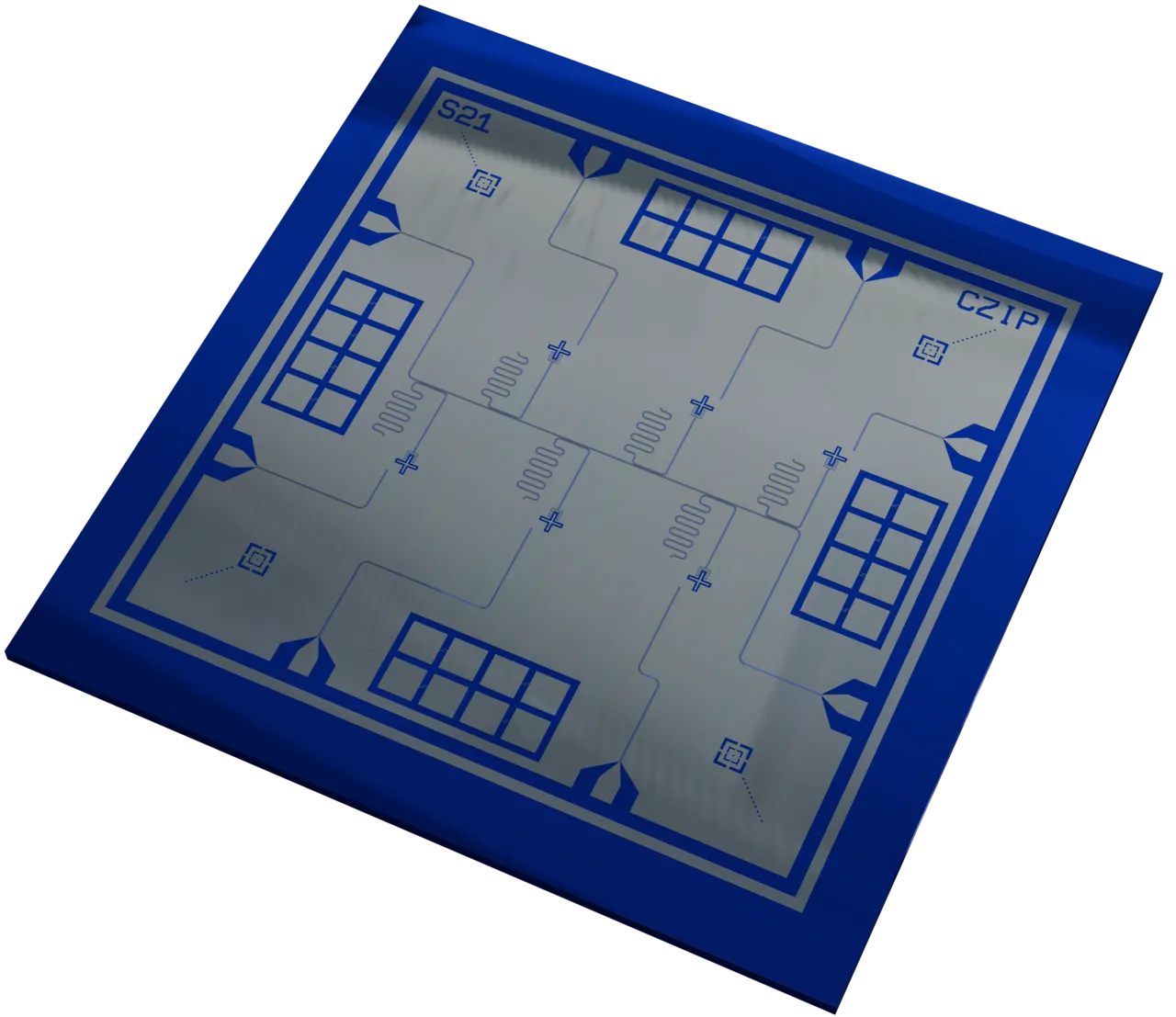
Superconducting qubits are tiny loops of superconducting metal cooled near absolute zero. IBM says it has deployed more than 30 quantum computers exceeding 100 qubits since 2022. Over 2,300 qubits are now available across its fleet, running more than 3.9 trillion circuits to date. Its current processors include the 120-qubit Nighthawk and the 133- and 156-qubit Heron family. Google’s Willow result also included a benchmark task finished in under five minutes. Google said a leading supercomputer would need about 10 septillion years for the same task.
Trapped-ion qubits are individual charged atoms held in place and controlled with lasers. Of the five platforms, this one has pushed gate accuracy the furthest. IonQ says its Forte Enterprise system runs 36 physical qubits with an “algorithmic qubit” score of 36, its own measure of how many of those qubits behave reliably enough to use. Its two-qubit gate error is about 0.4%. IonQ’s newer Tempo system, launched in 2025, reaches an algorithmic-qubit score of 64. Quantinuum says that on 12 May 2025 its 56-qubit System Model H2 reached a Quantum Volume of 8,388,608, a benchmark combining qubit count, connectivity and error rate. That result fulfils a 2020 commitment to raise that score tenfold every year for five years running.
Neutral-atom qubits are individual atoms held in a grid by laser tweezers, and they have produced the field’s clearest error-correction demonstration to date. A Harvard-led team working with QuEra, MIT and NIST/University of Maryland reported in Nature on 6 December 2023 that it had run algorithms on 48 error-corrected “logical qubits”. A logical qubit is a group of physical qubits wired together to catch and fix each other’s errors; the team’s 48 came from 280 physical neutral atoms. QuEra’s own Aquila machine, launched in November 2022 as the first publicly accessible neutral-atom computer, runs 256 qubits. It has been available through Amazon Braket for over 100 hours a week since launch. Pasqal says its Orion Gamma system already runs more than 140 qubits in production, including a machine integrated with Italy’s CINECA supercomputer centre. Pasqal targets over 1,000 qubits by early 2027.
Photonic qubits are encoded in particles of light rather than matter, trading today’s qubit counts for a manufacturing shortcut. PsiQuantum says its Omega platform reaches a two-qubit fusion fidelity of 99.22% on silicon-nitride chips made in standard semiconductor foundries. PsiQuantum broke ground in 2025 on facilities in Illinois and Australia. It aims to deploy million-qubit systems at both sites, rather than the thousands of qubits current rival platforms run.
Spin qubits are encoded in the spin of a single electron inside a semiconductor, making them the smallest and least power-hungry platform so far. QuTech, run by TU Delft and TNO, published a four-qubit germanium processor in 2021 with full control over every qubit and all four entangled together. QuTech says its qubit counts on germanium have roughly doubled every year since its first such qubit in 2019.
No platform leads on every measure. Superconducting and neutral-atom systems have shown error correction below or near the threshold needed for useful computing, while trapped ions lead on gate fidelity. Photonic and spin qubits are still betting on chip-foundry manufacturing to close the scale gap. The nearest dated milestone among them is Pasqal’s target of over 1,000 qubits by early 2027.
Sources
- [1]Meet Willow, our state-of-the-art quantum chip Google Quantum AI
- [2]Hardware for useful quantum computing IBM Quantum en IBM Research
- [3]IonQ Forte Enterprise: Quantum Computer for Data Centers IonQ
- [4]Quantinuum Dominates the Quantum Landscape: New World-Record in Quantum Volume Quantinuum
- [5]Leading the charge toward large-scale, fully fault-tolerant quantum computing Quantinuum
- [6]Aquila | 256-qubit Quantum Computer QuEra Computing
- [7]Harvard, QuEra, MIT and the NIST/University of Maryland Usher in New Era of Quantum Computing by Performing Complex, Error-Corrected Quantum Algorithms on 48 Logical Qubits The Quantum Insider
- [8]World's first logical quantum processor ScienceDaily
- [9]Quantum Computers Pasqal
- [10]A silicon photonics platform built for the future of computing PsiQuantum
- [11]Semiconductor qubits scale in two dimensions QuTech (TU Delft en TNO)
MethodologyHow this article was made
- Facts confirmed
- 8 / 9
- Sources
- 11
- Last checked
- Nov 5, 2026
- Image
- Photo
This article was written by an AI system from facts in international trade media, publications by companies and research institutes and public sources, with the source for every fact, and checked under our methodology. The byline is an editorial pseudonym. Found an error? Report it through the contact page.
Facts used
- On 9 December 2024, Google said its 105-qubit superconducting Willow chip was the first to demonstrate quantum error correction "below threshold", cutting the error rate roughly in half each time the error-correcting qubit grid was scaled up from 3x3 to 5x5 to 7x7. Google also said Willow completed a random-circuit-sampling benchmark in under five minutes that would take a leading supercomputer an estimated 10 septillion years. Google · Nov 5, 2026
- In superconducting qubits, IBM says its current processor family includes the 120-qubit Nighthawk, built on a square-lattice layout with four-way qubit connectivity, alongside the 133- and 156-qubit Heron processors that use tunable couplers. IBM says it has deployed more than 30 quantum computers exceeding 100 qubits since 2022, and over 2,300 qubits are available across its fleet, running more than 3.9 trillion circuits to date. IBM · Nov 5, 2026
- In trapped-ion qubits, IonQ says its Forte Enterprise system runs 36 physical qubits with an "algorithmic qubit" (#AQ) score of 36, its measure of how close usable qubits come to the raw physical count, and its newer Tempo system, launched in 2025, reaches IonQ · Nov 5, 2026
- Quantinuum says that on 12 May 2025 its 56-qubit System Model H2 trapped-ion computer reached a Quantum Volume of 2 to the power 23, or 8,388,608, a benchmark combining qubit count, connectivity and error rates. Quantinuum says this fulfils a commitment it made in 2020 to increase Quantum Volume tenfold every year for five years, and follows its H1 system becoming the first commercial quantum computer to reach "three nines" (99.9%) gate fidelity. Quantinuum · Nov 5, 2026
- In neutral-atom qubits, QuEra says its Aquila machine, launched in November 2022 as the first publicly accessible neutral-atom quantum computer, is a 256-qubit analog processor built from a reconfigurable array of rubidium atoms held about 4 micrometres apart by laser tweezers. QuEra says Aquila has been available through Amazon Braket for over 100 hours a week since its launch and has been used for physics research, including a Nature-published simulation of "string breaking". QuEra · Nov 5, 2026
- On 6 December 2023, a Harvard-led team working with QuEra, MIT and NIST/University of Maryland reported in Nature that it had run complex algorithms on 48 error-corrected "logical qubits" built from 280 physical neutral atoms, using a code distance of 7 to detect and fix errors during the entangling operations, according to The Quantum Insider and ScienceDaily. Both outlets reported this as the first large-scale demonstration that increasing code distance reduces the error rate of logical operations, and that the logical qubits outperformed the same algorithms run directly on physical qubits. reported by news media: thequantuminsider.com, sciencedaily.com · Nov 5, 2026
- Pasqal, the other main neutral-atom company, says its Orion Gamma system runs more than 140 qubits in production use, with 256-qubit high-fidelity operation available; deployed systems include a 140-qubit machine integrated with Italy's CINECA supercomputer centre and a system paired with the Joliot-Curie supercomputer in France. Pasqal says its roadmap targets over 1,000 qubits by early 2027 and more than 10,000 by 2028. Pasqal · Nov 5, 2026
- In photonic qubits, PsiQuantum says its Omega platform encodes qubits in photons on silicon-nitride chips made in standard semiconductor foundries, reporting a two-qubit fusion fidelity of 99.22% and more than a million individual photonic devices tested on wafers produced at scale. PsiQuantum says it broke ground in 2025 on quantum-computing facilities in Illinois and Australia, aiming to deploy million-qubit systems at both sites rather than the thousands of qubits current rival platforms run. PsiQuantum · Nov 5, 2026
- In spin qubits, QuTech, the quantum institute run by TU Delft and TNO, says it built a processor in which four qubits made from quantum dots in germanium work together in a two-by-two grid, with universal control over every qubit and a circuit entangling all four, published in 2021. QuTech says the number of qubits on its germanium chips roughly doubled every year after its first such qubit in 2019, and describes the 2021 four-qubit grid as a step toward scalable, two-dimensional spin-qubit arrays. QuTech · Nov 5, 2026