Florida Team's Quantum Algorithm Hits 91.9% Accuracy on Lung Cancer Data
A Florida Atlantic University team tested three quantum machine learning methods on a small lung cancer dataset and found a quantum support vector machine on D-Wave's annealing hardware scored highest, at 91.90 percent accuracy.
- Published
- Updated
- 2 min read
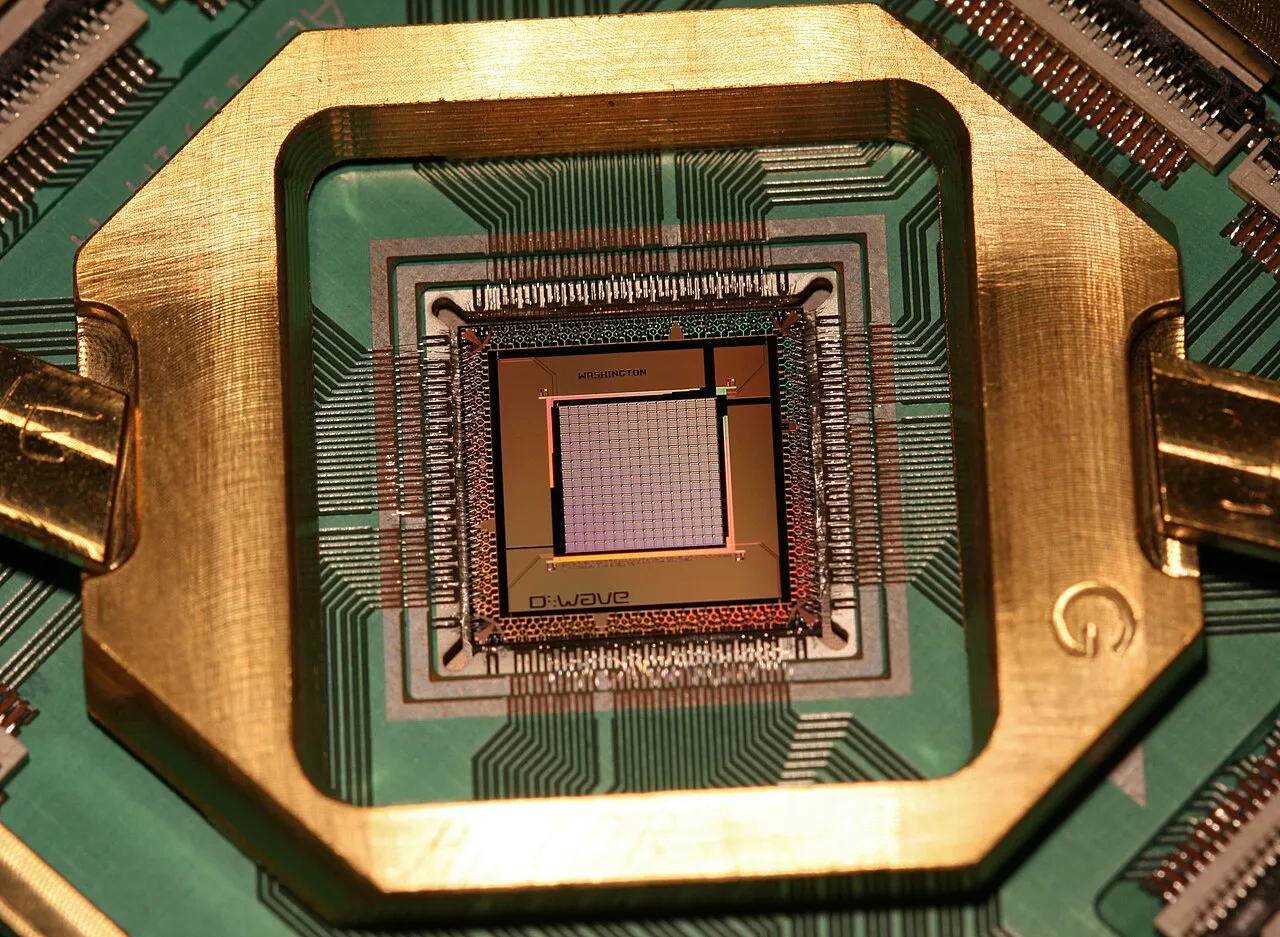
A quantum support vector machine run on D-Wave’s quantum-annealing hardware reached 91.90 percent accuracy predicting lung cancer, according to the published study. It used a small set of symptom and risk-factor data. In simulation, the same method scored 94.31 percent. According to the published study, that was the best score among three quantum machine learning methods tested by a team at Florida Atlantic University. The team wanted to see whether quantum approaches can still learn useful patterns from a small training dataset, a common problem in healthcare machine learning.
The team is in the university’s Department of Electrical Engineering and Computer Science. It is led by professor Arslan Munir, director of its Intelligent Systems, Computer Architecture, Analytics, and Security lab. It compared quantum support vector machines, quantum k-nearest neighbors and quantum boosting. It ran them on both gate-based and quantum-annealing hardware. Of the three, the quantum support vector machine on D-Wave’s annealer came out ahead.
The researchers started from a public dataset of 309 records, according to the published study. It covered symptoms such as smoking history, coughing, wheezing, fatigue and chest pain, plus other risk factors. They expanded it to 540 samples with synthetic data generation, to balance the classes. They then narrowed the inputs from 16 attributes to 10 variables through feature selection.
The published study reports that the team ran its gate-based and annealing-based methods on five quantum computing platforms and frameworks: D-Wave, Qiskit, Cirq, PennyLane and OpenJij. That let them compare the methods under the same data preparation and testing conditions.
The work appeared on September 9, 2026 in Discover Quantum Science, a Springer Nature journal, the published study shows. It ran as volume 2, article 34. The paper is titled Inferring lung cancer under limited learning data through gate-based and annealing-based quantum techniques.
The authors, according to the published study, plan to compare classical and quantum approaches to hyperparameter tuning. They also plan to extend the analysis to imaging-based lung cancer prediction and to explore explainability techniques. A further step is to move from the current binary prediction task to multi-class classification. They note that the dataset excludes imaging data, pathology reports, lab tests, cancer stage and multi-center clinical validation. So the framework is a preliminary screening-support and methodological study, not a clinical diagnostic system.
Sources
MethodologyHow this article was made
- Facts confirmed
- 6 / 6
- Sources
- 2
- Last checked
- Nov 2, 2026
- Image
- Photo
This article was written by an AI system from facts in international trade media, publications by companies and research institutes and public sources, with the source for every fact, and checked under our methodology. The byline is an editorial pseudonym. Found an error? Report it through the contact page.
Facts used
- Of the methods tested, a quantum support vector machine run on D-Wave's quantum-annealing hardware scored highest, reaching 94.31 percent accuracy in simulation and 91.90 percent accuracy on the actual quantum hardware. Discover Quantum Science (Springer Nature) · Nov 2, 2026
- A team at Florida Atlantic University's Department of Electrical Engineering and Computer Science, led by professor Arslan Munir (director of the university's Intelligent Systems, Computer Architecture, Analytics, and Security lab), tested three quantum machine learning methods — quantum support vector machines, quantum k-nearest neighbors and quantum boosting — for predicting lung cancer from symptom and risk-factor data, using both gate-based and quantum-annealing hardware. The goal was to see whether quantum approaches can learn useful patterns when only a small training dataset is available, a common problem in healthcare machine learning. Discover Quantum Science (Springer Nature) · Nov 2, 2026
- The researchers started from a publicly available dataset of 309 records covering symptoms (smoking history, coughing, wheezing, fatigue, chest pain) and other risk factors, then expanded it to 540 samples with synthetic data generation to balance the classes, before narrowing the inputs from 16 attributes to 10 variables through feature selection. Discover Quantum Science (Springer Nature) · Nov 2, 2026
- The team ran its gate-based and annealing-based methods across five quantum computing platforms and frameworks — D-Wave, Qiskit, Cirq, PennyLane and OpenJij — to compare them under the same data preparation and testing conditions. Discover Quantum Science (Springer Nature) · Nov 2, 2026
- The study, titled "Inferring lung cancer under limited learning data through gate-based and annealing-based quantum techniques," was authored by Muhammad Minoar Hossain, Md. Hasibul Hassan Himal and Arslan Munir and published on September 9, 2026 in Discover Quantum Science, a Springer Nature journal, as volume 2, article 34 (DOI 10.1007/s44464-026-00038-4). The outlet coverage picked up the study nearly two months later, on November 2, 2026. Discover Quantum Science (Springer Nature) · Nov 2, 2026
- In the paper itself, the authors list their planned next steps as comparing classical and quantum approaches to hyperparameter tuning, extending the analysis to imaging-based lung cancer prediction, exploring explainability techniques, and extending the current binary prediction task to a multi-class classification problem. They also note the current symptom- and risk-factor-based dataset excludes imaging data, pathology reports, lab tests, cancer stage and multi-center clinical validation, so the framework is a preliminary screening-support and methodological study rather than a clinical diagnostic system. Discover Quantum Science (Springer Nature) · Nov 2, 2026