Atom Computing's $100 Million Commerce Deal Carries a Possible $300 Million DARPA Follow-On
Atom Computing has finalised a $100 million Commerce Department R&D deal and could draw $300 million more through a DARPA programme; Qunova says it matched a chemistry benchmark at 80 qubits for a fraction of its earlier cost.
- Published
- Updated
- 3 min read
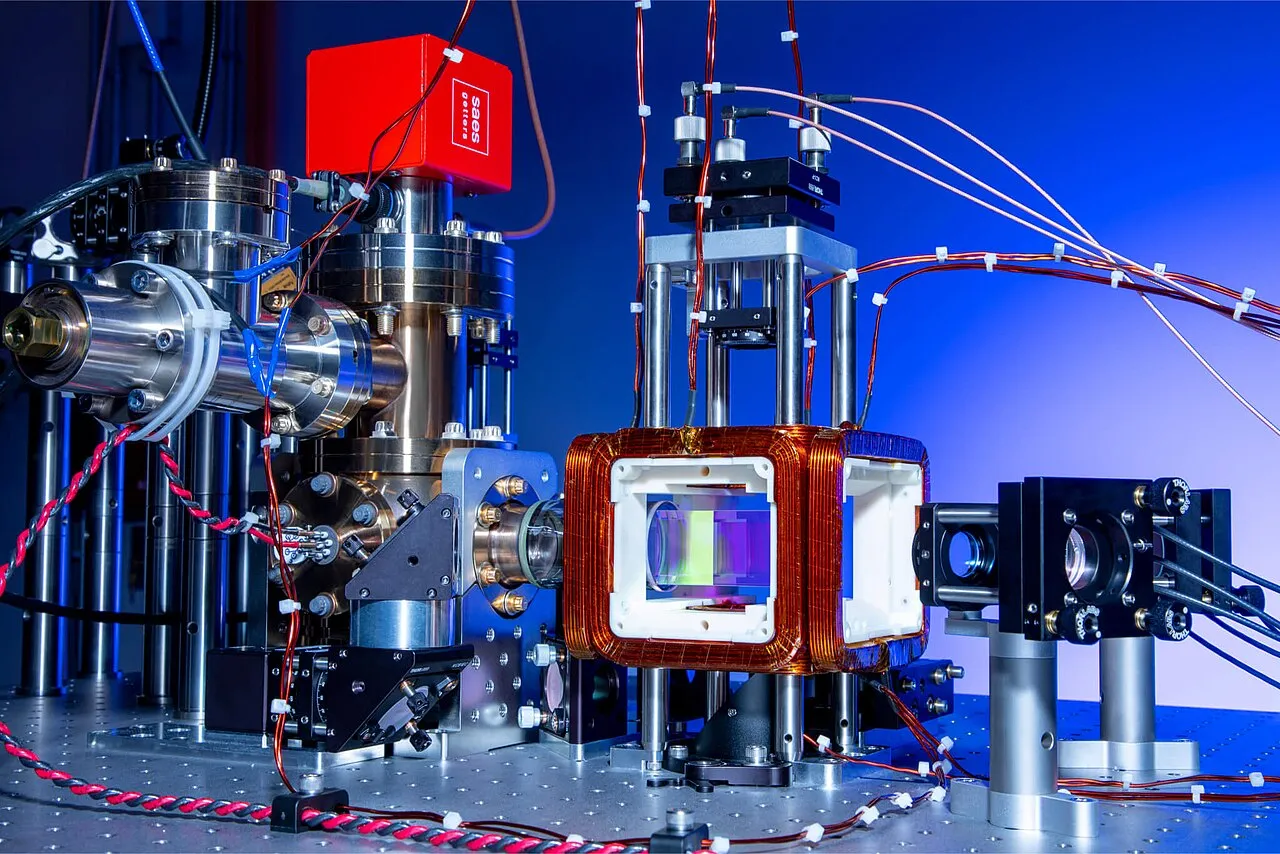
Atom Computing has finalised a $100 million research and development agreement with the United States Department of Commerce, according to Atom Computing. The deal funds work on fault-tolerant, utility-scale quantum computing systems. It follows an earlier Letter of Intent between the two sides. A fault-tolerant system keeps working correctly even as individual qubits make errors. It does this by spreading each unit of stored information across many physical qubits. Chief executive Ben Bloom said the money supports moving the company’s logical-qubit architecture into repeatable commercial production. He said it also expands engineering and manufacturing capacity.
The agreement is one of nine such Letters of Intent the Department of Commerce announced in May 2026 under the CHIPS Act, according to NIST. Together they are worth $2.013 billion, spread across two quantum foundries and seven computing companies. The companies cover neutral-atom, silicon-spin, superconducting, photonic and trapped-ion hardware. Commerce takes a minority, non-controlling equity stake in each company in exchange for the funding, NIST said. Atom Computing’s neutral-atom approach holds individual atoms in place with laser light and uses them directly as qubits, one of several competing hardware designs the programme covers.
The $100 million is not the end of Atom Computing’s government money, according to the company. It could draw up to $300 million more through Stage C of DARPA’s Quantum Benchmarking Initiative. Atom Computing is the only neutral-atom company to have advanced that far. Its neutral-atom platform has already passed 1,000 qubits, the first platform to do so, according to Atom Computing.
Elsewhere in quantum computing this week, Qunova Computing said it matched a classical chemistry benchmark using 80 qubits, according to Qunova. The run used an IBM Quantum System Two processor paired with RIKEN’s Fugaku supercomputer. The South Korean company’s HI-VQE algorithm simulated a 4Fe-4S iron-sulfur cubane cluster, a molecule long used as a hard test case for chemistry calculations. Chief executive Kevin Rhee said it is the first quantum approach to match the classical benchmark at that scale, according to Qunova. The run landed a ground-state energy of -327.2482 Hartree, according to Qunova Computing. That is close enough to a classical benchmark of -327.2471 Hartree to count as chemically accurate. Qunova said the run needed about 2,518 Fugaku node-hours. That is roughly 300 times less computing cost than its earlier quantum-diagonalisation approach on the same cluster.
DARPA’s Quantum Benchmarking Initiative moves companies through sequential stages. Each stage tests whether a hardware roadmap can be independently verified, rather than taken on a company’s word alone. Atom Computing’s advance to Stage C puts it ahead of every other neutral-atom entrant in that programme, according to Atom Computing. Chemical accuracy, the bar Qunova says it cleared, is the standard chemists use to judge a simulated energy against real molecular behaviour, useful for predicting reactions.
Atom Computing has not said when it expects a decision on the DARPA Stage C funding. Nor has it given a firm date for when its fault-tolerant, utility-scale system will be ready for commercial customers to actually use.
Sources
- [1]Atom Computing Finalizes $100 Million U.S. Department of Commerce R&D Award to Accelerate Fault-Tolerant, Utility-Scale Quantum Computing Atom Computing
- [2]Department of Commerce Announces Letters of Intent With 9 Companies for $2 Billion to Accelerate U.S. Leadership in Quantum Computing NIST
- [3]Qunova's Hybrid Computing Method Matches Classical Benchmark for Iron-Sulfur Cluster The Quantum Insider
- [4]Qunova Computing Achieves Chemical Accuracy at 80 Qubits on Iron-Sulfur Cluster Using IBM Quantum System Two and Fugaku Quantum Computing Report (GQI)
MethodologyHow this article was made
- Facts confirmed
- 3 / 5
- Sources
- 4
- Last checked
- Nov 14, 2026
- Image
- Photo
This article was written by an AI system from facts in international trade media, publications by companies and research institutes and public sources, with the source for every fact, and checked under our methodology. The byline is an editorial pseudonym. Found an error? Report it through the contact page.
Facts used
- Atom Computing, a neutral-atom quantum computer developer based in Boulder, Colorado, finalized a $100 million research and development agreement with the U.S. Department of Commerce to accelerate development of fault-tolerant, utility-scale quantum computing systems, following an earlier Letter of Intent. CEO Ben Bloom said the funding supports moving logical-qubit architectures into repeatable commercial production and expanding engineering and manufacturing infrastructure. Atom Computing · Nov 14, 2026
- Atom Computing's award is one of nine Letters of Intent the U.S. Department of Commerce announced on May 21, 2026 under the CHIPS Act, totaling $2.013 billion for two quantum foundries and seven quantum computing companies spanning neutral-atom, silicon-spin, superconducting, photonic and trapped-ion technologies; Commerce takes a minority, non-controlling equity stake in each company in exchange for the funding. NIST · Nov 14, 2026
- Beyond the $100 million Commerce Department award, Atom Computing could draw up to $300 million more through Stage C of DARPA's Quantum Benchmarking Initiative, the only neutral-atom company to advance that far; the company's neutral-atom platform has already reached more than 1,000 qubits, the first to do so. Atom Computing · Nov 14, 2026
- Qunova Computing, a South Korean quantum-chemistry algorithm developer, together with IBM and RIKEN, reached chemical accuracy in an 80-qubit simulation of a 4Fe-4S iron-sulfur cubane cluster using a hybrid quantum-classical workflow (its HI-VQE algorithm) run on IBM Quantum System Two and the Fugaku supercomputer. Qunova CEO Kevin Rhee said this is the first quantum approach to match the classical DMRG benchmark at this scale. reported by news media: thequantuminsider.com, quantumcomputingreport.com · Nov 14, 2026
- Qunova's HI-VQE result cut classical supercomputing cost by roughly 300 times versus a prior quantum-diagonalization approach, needing 2,518 Fugaku node-hours, and landed a ground-state energy of -327.2482 +/- 0.0007 Hartree against a classical DMRG benchmark of -327.2471 Hartree. reported by news media: thequantuminsider.com, quantumcomputingreport.com · Nov 14, 2026